Showing posts with label Photography. Show all posts

Monday, October 7, 2024

Grand Pictures

 by Susan Zehnder, Education Director 

If you’ve had a chance to wander through our exhibit “Grand, Domestic and Truly Comfy,” you’ve seen recreations of some of the rooms from the Langdon Mansion, once a landmark of the Elmira area. Located near the intersection of West Church and North Main streets in downtown Elmira, the property was first owned by Anson C. Ely. In 1862, Jervis Langdon purchased the home from Ely’s widow along with a neighboring lot. Four years later, he had the house remodeled and enlarged to meet his needs. Every interior surface was covered, with much of the work done by Pottier and Stymus, a top interior decorating firm and leading cabinet-maker out of New York City. As was the style for wealthy patrons in that era, the home was highly ornate. It truly was grand both inside and out.

View of the Langdon Mansion

Putting the exhibit together required our guest curator, Walter G. Ritchie, Jr., to do months of research. A critical part of his work relied on photographs taken in the mid-1870s. By this time Jervis Langdon had died, but his wife engaged the decorating firm once again to update additional rooms. And Van Aken was hired to document them. Many of the photographs Ritchie used have been enlarged and are mounted on the wall behind each of our room settings. As if frozen in time, they give us a glimpse of what each room looked like. If you look closely, you can find furniture and objects from the pictures on display in the settings. The photographs are one-half of a pair of stereographic images. The curved border at the top is a distinctive framing of many photographs done in this style. 

Stereographic images rely on viewers seeing two nearly identical images at the same time and our brains combining the two to “see” depth. This illusion, also known as binocular vision, can give viewers a life-like experience, as if they are standing in the same space where the picture was taken. In 1838, English inventor and physicist Charles Wheatstone had devised a system to create intricate drawings which viewers used to perceive depth. Imagine how relieved he must have been when advances in photography made depth perception much easier.

Sir Charles Wheatstone (1802-1875) photo by Granger

Beginning in the 1840s, stereoscopic images became a popular form of photography, and by the 1850s, they were a staple in many American parlors. We have a blog about them
here. At the time, instead of scrolling through social media for hours, people entertained themselves with stereoscopic images of faraway places.

The photographs of the Langdon family home that our guest curator researched were taken by Elisha M. Van Aken, who ran a photographic studio in town. Van Aken was born in Rensselaerville, New York, in 1828, and took up photography in his early twenties, when the art form was new. He moved to Lowville, New York, where he set up a portrait studio over the village Post Office. In 1856, he was advertising his ambrotyping, daguerreotyping and photographing services. In 1873, now with a family and well-established career, he moved to Elmira.

Van Aken’s studio was first located at 134 West Water Street and later at 120 West Water Street. The 1870s were the height of stereoscopic imagery’s popularity, and his work in this and in studio portraiture was prolific. His photographs documented everyday life in Elmira of the late 19th and early 20th century, featuring street scenes, businesses, people, homes, and pets. 

In addition to his studio work, Van Aken was often seen hiking about the outskirts of town, lugging his equipment.

Elisha M. Van Aken and his camera

He photographed nature, people, events, and buildings, both inside and out. His son Charles joined him in the studio, learning the business, and became quite the photographer too. In the spring of 1904, the elder Van Aken fractured his hip and died a short time later at the age of 76. A notice about his death in the April 30, 1904 edition of the Star-Gazette declared “Mr. Van Aken did much for lazy people. He found the hundreds of scenes worth depicting around the outskirts of the city and his busy camera reduced them to paper so that they might be enjoyed by those disinclined to go and see for themselves.” 

Today Van Aken photographs can be found in national collections including those of the Smithsonian Institution, the George Eastman Museum, and The Getty Museum. We are fortunate to have many Van Aken glass plate negatives and prints too, including those hanging on the walls of our current exhibit.

Grand, Domestic and Truly Comfy: The Langdon Mansion in Elmira will be on display until May, 2025


Monday, May 20, 2024

A Listing of Local Photographers

By Rachel Dworkin, Archivists

There were almost 50 photography studios in operation in Chemung County during the 19th century. For much of that century, there were no amateur photographers. Taking and developing photographs was a difficult process requiring expensive equipment and training, so, until the 1890s, pretty much every photograph taken in the area was done by one of the professional studios.

Each of these photographers and studios had their own makers’ marks. For us here at the Chemung County Historical Society, knowing a photographer’s years of operation is invaluable when it comes to dating their photographs. Below is a handy-dandy list of all know 19th century photographers and studios in Chemung County along with their dates and some additional information.


M.A. Breese, 1889-1890

W.M. Boyd, 1882-1884

J.M. Clark, 1860

C.C. Doty, 1863-1864

E.T. Dunn, 1866-1867

Elmira Portrait Co., 1887-1911

Elmira Portrait Company was a partnership between three artists, Herbert M. Daggett, Samuel C. Woodside, and Allen O. Adams. In addition to doing portrait photography, they also offered portraits in crayon, India ink, and watercolor. 


Elmira Portrait Company letterhead, ca. 1890s

Empire View Co., 1897-1899

Excelsior View Co., 1888-1890

C.J. Sylvester, 1890-1900

 Charles Sylvester ran the Excelsior View Company for two years before deciding to operate the studio under his own name. All our photographs of the Flood of 1889 were taken by Sylvester and have the Excelsior logo.

 C.F. Fudge, 1899-1917

W. Gulick, 1897

J.G. Harrison, 1884-1886

A.P. Hart, 1857-1877, 1880-1893

Hart & Evans, 1878-1879

Abraham P. Hart was born in Goshen, Connecticut in 1816 and came to Elmira in 1837. He was one of the first photographers in the area and certainly one of the longest running. He was still working right up until his death in January 1894.

 T.S. Hathaway, 1857-1859

Hathaway & Letts, 1860

 A.B. House, 1866-1867

J.W. House, 1860

Howe, 1882-1899

Charles Howe came to Elmira from Binghamton in 1882 and bought out the studio of N.D. Luce at 137 East Water Street. In 1899, he purchased an art supply store just down the street and became Howe’s Art Shop, specializing in photography supplies, developing, and framing.

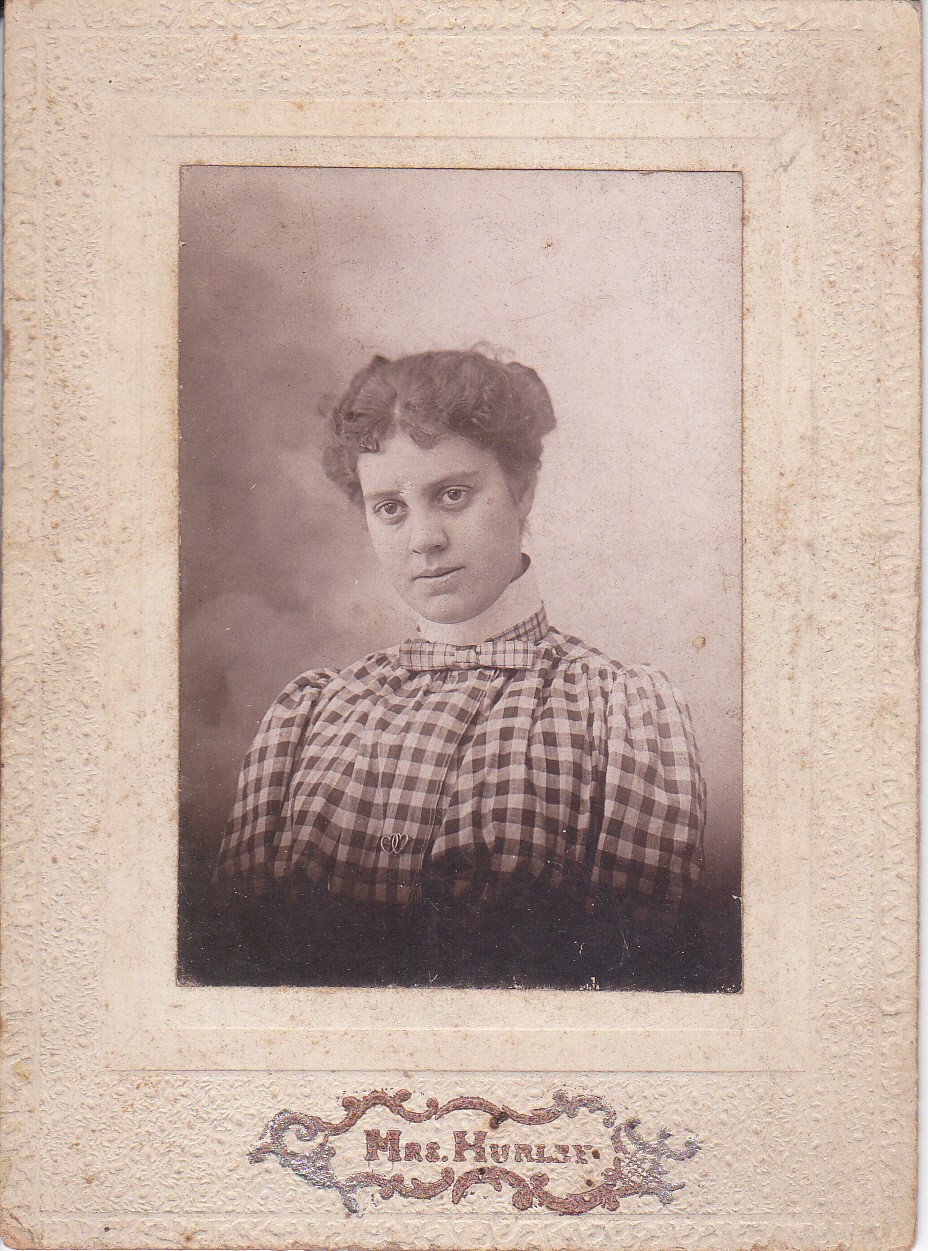
L. Hurley, 1895-1901

Lottie Hurley was Elmira’s first female photographer. She specialized in portraits, mostly of women and children, and also sold wallpaper and did interior decorating. 

Photo of a young woman by Mrs. Lottie Hurley, ca. 1890s


J.E. Kendall, 1861

Kendall was one of the few non-Elmira photographers in Chemung County. He operated in Sullivanville in Erin, N.Y.

W. Knowlton, 1866-1869

F.L. Landon, 1895-1898

J.E. Larkin, 1860-1891

John E. Larkin was born in Rome, N.Y. in 1836. He came to Elmira as a young man in 1858 to open his photography studio. He took some of the best pictures we have of the Elmira Civil War Prison Camp. He retired from photography to become the treasurer of the Elmira Mechanics Society and, later, the director of the Second National Bank of Elmira.

A. Lawhead, 1866-1867

Luce & Silverman, 1876-1877

N.D. Luce, 1878-1882

McFarlin & Speck, 1893-1896

A. McFarlin, 1897-1951

Abram McFarlin came to Elmira from Shellsburg, Pennsylvania. His studio at 158 N. Main Street, which was later demolished to make way for the Mark Twain Hotel, had previously been home to the studios of W.C. Rowley and W.A. Gulick. He specialized in portrait photography, amassing over 50,000 negatives over the course of his career.

W. Mitchell, 1863-1864

W.M. Morgan, 1895-1898

William J. Moulton, 1860-1864

E.L. Mowry, 1884-1888

New York Photo Co., 1897-1898

G. Personius, 1893-1919

Personius Studio, 1920-1945

George Personius began working as an itinerant photographer in northern Pennsylvania before settling down in an apprenticeship with Charles Howe. He eventually established his own studio in Elmira. His health declining, he sold the business to Randall H. Warne in 1945 and the Personius Warne Studio continues to this day.

W.C. Rowley, 1886-1896

H. Sartor, 1893-1910

W. Seeley, 1861-1864

A.L. Snook, 1872-1873

R.F. Snyder, 1891

D. Stamp, 1895-1905

C. Tomlinson, 1874-1891

E.M. Van Aken, 1874-1904

Elisha Van Aken came to Elmira from Lowville, N.Y. in 1874. He was eventually joined in his business by his son, Charles, who took over and re-named the studio following his father’s death. Here at the Historical Society, we have a large collection of his glass plate negatives of area views. Most photos of Mark Twain or his family taken in Elmira were done by Van Aken.

P.J. Ward, 1868-1897

For most of the 19th century, Peter J. Ward was the only photographer in Horseheads. In 1897, he was forced to sell his business to Charles Sylvester due to ill health. 

Back of photograph by P.J. Ward, ca. 1870s


J.H. Whitely, 1863-1871, 1874-1881, 1885-1895

Whitley & Denton, 1872-1873

Whitely & Harrison, 1882-1884

C. Wilbur, 1898-1900

G.H. Wright, 1890-1891

Monday, February 26, 2024

Ace Photographer

By Rachel Dworkin, archivist

 Over the years, I must have seen the logo of Ace Photo Studio on the back of a hundred photos in our collection, but I didn’t know much about the studio or George “Ace” Horsey, the man who owned it. Then two of his nieces came in looking to see what we had on their family. In the end, they wound up educating me! They kindly shared their family’s story with me so I, in turn, could share it with you.


George “Ace” Horsey Jr. (1926-1990) was born in Salisbury, Maryland one of the seven children of Danie and George Horsey Sr. He was always interested in photography. While serving in the United States Army Air Corps in World War II, he got an opportunity to take a training course on the subject. In 1950, Horsey, his wife Mary, and their young family moved to Elmira so he could take a job at the General Electric (G.E.) Foundry as the plant photographer. He took pictures for advertising purposes and the G.E. News, the company newspaper. In 1956, he was elected sergeant-at-arms in the plant’s Electrical Workers Union and served on the labor contract negotiation team at one point. 


From G.E. News, January 15, 1954

Outside of work, Horsey was a member of the Douglas A.M.E. Zion Church where he frequently took pictures of members and events. Quite a number of his photographs ended up in the local newspaper throughout the 1950s. In 1956, he began volunteering at the Neighborhood House where he served as the instructor for the Camera Club. He took kids on photo shoots to area parks, taught them how to develop film, and served as judge during their annual photography show. He eventually became involved on the Neighborhood House board of trustees, serving as treasurer for a time.


Douglas A.M.E. Zion Church choir, ca. 1960s

Horsey and his family prospered in Elmira. He and Mary had four children: Mary, Barbara, Vanessa, and George III. He encouraged his aging parents and siblings to join him here. Most did. Many of their children still live in the area today. 


Danie & George Horsey Sr. with children George Jr., Epluribus, Louise, Richard & Geneva, ca. 1950s
 

Horsey children Mary, George III, Barbara & Vanessa, ca. 1950s


Horsey children Mary, George III, Barbara & Vanessa, ca.1980

In 1958, Horsey opened Ace Photo Studio, Elmira's first Black-owned photography studio. It was originally located at 665 Lake Street, although the studio had a number of homes over the years. Horsey specialized in portraits, weddings, and commercial photographs. He was very interested in historic photography and also offered a service where he would make new copies of customers’ old family photos. Horsey retired and closed his studio in 1984. He died on May 29, 1990, leaving behind his family and a wealth of images documenting over 40 years of Elmira’s history.

Ace Photo Studio, ca. 1970s
 

The negatives from Ace Photo Studio are held by his family. One of his nieces generously allowed me to scan some for this blog. The truth is, there are so many fascinating people and stories in Chemung County and we here at the Historical Society barely know a tenth of them. It is only through the efforts and generosity of the community that we are able to learn about and share them. Thank you, Horsey family, for sharing your story. Thank you to the next person who shares theirs too.

Monday, May 16, 2016

Virtual Realty - Old School Edition


by Rachel Dworkin, archivist
 
In recent years, several companies have unveiled new virtual reality devices designed to give users an immersive experience.  In June 2014, Google released Cardboard, a 3D virtual reality platform for use with special mount for a smartphone.  The mounts are relatively cheap (less than $5) and there are already thousands of apps and videos which users can view.  One app, called Expedition, allows students to use Cardboard to take virtual tours of historic and cultural sites from around the world.  It’s deeply cool, but it is also not as innovative as you might think.

 In 1851, David Brewster presented the Brewster Stereoscope, which he had developed with Professor Elliot and Jules Duboscq, to Queen Victoria at the Great Exhibition.  This kicked off a 3D craze with stereoscopes and stereoviews selling like hotcakes.  The idea behind the technology was simple and, in fact, mimicked the way human eyes naturally work.  Each stereoview featured two near-identical images side by side.  The two lenses in the stereoscope allowed both images to be viewed simultaneously, one by each eye, creating the illusion of depth.  In case you were wondering, that’s also exactly how Google Cardboard works too. 
 
In 1861, American inventor Oliver Wendell Holmes created, but specifically did not patent, a simplified version of the Brewster Stereoscope.  The original version was rather bulky and had involved multiple lenses which made it rather costly.  The Holmes Stereoscope on the other hand, was a simple wooden frame with just two prismatic lenses and, thus, a whole lot cheaper to make.  The average one sold for $.20 at a time when you could get a good wool coat for $28.

A Holmes Stereoscope, 1895
 
The simple Holmes Stereoscope quickly became a staple in most American homes, mostly because, without television, people had to make their own fun.  People collected cards of famous historic and cultural sites from all over the world.  We recently received the Hoefer Family stereoview collection.  Rosina & John Jacob Hoefer lived in Elmira, but had 68 images from 6  different countries, as well as views of important historical figures and from around New York State.  With them, they could explore and virtually visit places they could never reach in person.  Sounds familiar, right? 
 
Stereoviews from the Hoefer collection, front and back, 1908
 

Monday, November 2, 2015

Serious Thoughts on a Ridiculous Photograph

By Kelli Huggins, Education Coordinator

I think that the photograph above is one of the most remarkable pieces in our collection.  Yes, I’m serious.  While on the surface this photo is a little crass, allow me to explain just how unique this piece is.  In other words, this is my attempt to write a mature, thoughtful blog post about one of our most immature collection items. 
The photograph is a part of our collection of materials from Charles Whipple, a Horseheads resident.  We have his diaries, photographs, and other assorted documents.  Tucked in amongst these items is the photograph in question.  There are several photographs of these two dogs, showing them around the yard and in the home (and even on the bed).  The photos are dated 1948. 
This collection is a lovely glimpse at mid-century pet keeping.  Candid photos like these give us a better understanding of how our relationships with our pets have changed and stayed the same over time.  Like Whipple, people today take pictures of their animals playing, sleeping, or being otherwise adorable. 
The dogs look well loved.  But still, the first picture is special. 
First, it is remarkable that this photograph was even taken.  Photographic technology had made great strides in portability and affordability by the 1940s, but film was still a valuable resource.  There were families that took few photos of their children in the 1940s, much less their dogs.  So that someone would use a frame on this scene (and also the fact that they had a camera handy when this went down) is noteworthy.  And, not only was the picture taken, it was developed.
Someone cared enough about this photo to date it on the back (many of the other photos in the collection are not dated).  They also kept it.  Maybe it became a family joke. Eventually, the photograph was donated to the museum in 2009 as a part of the much larger Reverend Donald Roe collection (Whipple was Roe’s parishioner and his possessions were left in Roe's care after his death, thus adding another layer of improbability to the survival of this photograph). 
It is impressive that this small, silly photograph exists.  While it is not typically what most people would deem museum-worthy, I think that it is because it's a great reminder that people in the past were very much like us.  And if anything, this photo shows us that poop jokes have always been funny. 

Monday, March 2, 2015

Like a Train Wreck

by Rachel Dworkin, archivist

             If you’ve ever rubbernecked at a car crash, you’re probably not alone.  Curiosity and schadenfreude are, after all, perfectly natural human emotions.  It’s not even that weird to whip out your cell phone, take photos and tweet all about it.  Tacky?  Yes, but weird? No.  After all, people have been taking and sharing disaster photos for over a hundred years.

            In 1903, the Eastman Kodak company came out with the No. 3A Folding Pocket Kodak, a camera which used special postcard-sized film so that photographers could print their own postcards without having to crop the image.  In 1907, Kodak began offering ‘real photo postcards.’  This allowed anyone to have any of their photos printed on a mail-able card.   Now, people could easily mail baby photos to grandparents.   Now they could share their awesome disaster photographs.

            On May 8, 1911, a Lehigh Valley Railroad train derailed in Breeseport.  Locals flocked to the site to provide assistance and gawk.  Some enterprising soul took and sold real photo postcards of the wreck.   Sarah of Horseheads wrote to her cousin in Missouri in June on the back of one, catching her up on family news and sharing the details of the crash. 
Postcards sent by Sarah of the May 8, 1911 wreck
Another postcard of the May 8, 1911 wreck

            It was a similar story when the Delaware, Lackawanna and Western Express No. 11 collided with a passenger train just outside Corning on July 4, 1912.  41 people were killed in the crash and for days after people swarmed the site looking for victims and souvenirs.  And taking photos.