Monday, January 27, 2025

Birthright Citizenship

By Rachel Dworkin

Birthright citizenship has been in the news lately thanks to President Trump’s recent Executive Order 14156. The order ends birthright citizenship for the children of undocumented immigrants and legal migrants in the country on temporary work, student, or tourist visas. At present, nearly every country in North and South America has birthright citizenship, but the practice is rare in the rest of the world. Historically, its application in the United States has been…complicated.

Like most things about the American legal system, birthright citizenship in the United States has its roots in English common law. Traditionally, anyone born in the king’s domain was automatically a subject of the king, including anyone born in the Colonies. Following the American Revolution, a series of court cases confirmed that people born in the United States or its territories were automatically citizens…with exceptions. In Dred Scott v. Sanford (1857), the Supreme Court held that the U.S. Constitution only granted citizenship to whites and no one of African descent, whether free or enslaved, born here or not, could ever be citizens.

Today, the Dred Scott decision is widely regarded as one of the worst rulings the Supreme Court ever made. It was effectively overturned by the Citizenship Clause of the Fourteenth Amendment (adopted July 9, 1868). The clause states: 

"All persons born or naturalized in the United States, and subject to the jurisdiction thereof, are citizens of the United States and of the State wherein they reside." 

Even following the passage of the Fourteenth Amendment, there were questions about just who qualified when it came to birthright citizenship. In 1873, Wong Kim Ark was born in San Francisco, California to Chinese immigrant parents who were ineligible to become citizens themselves thanks to the Naturalization Law of 1802 which offered naturalization only to free whites. As a young man, Wong left to visit China and was subsequently denied re-entry to the United States upon his return thanks to the Chinese Exclusion Act of 1882 and a customs official’s refusal to acknowledge his citizenship. The case went all the way to the Supreme Court as United States v. Wong Kim Ark (1898). The court decided that the children of foreigners born on American soil were American citizens, whether the parents were eligible to become citizens or not. They made just four exceptions: children of foreign diplomats; children born on foreign public ships; children of enemy forces engaged in hostile occupation of the country’s territory, and children of Indian tribes (which were effectively considered sovereign peoples). This last exception was subsequently removed by the Indian Citizenship Act of 1924 which granted citizenship to all Native Americans.  


Wong Kim Ark, ca. 1904 (courtesy of Wikipedia)

So how does one prove American citizenship? These days, with a birth certificate, but it’s a relatively new phenomenon. In fact, for much of American history, birth records were held by churches, assuming there were even records at all. During the mid-1800s, different states began making a concerted effort to record births. New York State, for example, began collection birth records in 1881. Some counties and municipalities across the state began doing it earlier. New York City began recording births as far back as 1847. Chemung County has records going back to 1875, although not at the Historical Society.

The U.S. Public Health Service has a standard form for registering births, although many states have their own as well. The forms are completed by the attendant at birth or a hospital administrator and forwarded to the state and local health departments. In Chemung County, birth certificates are issued and held by the Chemung County Vital Records office at 103 Washington Street in Elmira. Parents receive a free copy of their child’s birth certificate and additional ones can be ordered for a fee. Everyone should have a copy of their birth certificate. You will need one when applying for a passport, driver’s license, or non-driver’s ID. You can request historical birth certificates for genealogical purposes from the Chemung County Vital Records office as well. 

Form for attendants at birth, ca. 1910s


Executive Order 14156 was signed on January 20, 2025. It was immediately challenged by the attorneys general of 22 states (including New York) and multiple organizations. Although it was initially slated to go into effect on February 19, 2025, it may never go into effect at all if the courts find it unconstitutional.


Monday, January 13, 2025

A Woman of Means: Sarah Wey Tompkins

by Erin Doane, Senior Curator

At our Woodlawn Cemetery Ghost Walk in 2024, the final story was that of Sarah Wey Tompkins (1866-1929). As I was researching her life to write the script, I was struck by the fact that nearly half of her obituary was about her father, her brother, and her husband. My printout of the obituary has 21 inches of text. 9.5 of those inches are about the men in her life. Her actual name, not “Mrs. Ray Tompkins,” does not appear until after 4 inches of text.

Sarah Wey Tompkins, from her obituary, Star-Gazette, January 22, 1929

It was not at all unusual for a woman in the early 20th century to be almost exclusively referred to as “Mrs. Husband’s Name” in public and to be known only in the context of her male relatives. Though both are pet peeves of mine, in this case, the conventions make some sense. Sarah Wey Tompkins was a woman of means because of the families she was born and then married into. While she was an active philanthropist, she owed her ability to donate large amounts of time and money to charitable causes to the men in her life. This context is just as important as her accomplishments.

Sarah Ross Wey was born on July 22, 1866. Her father was a prominent doctor and president of the New York State Medical Society in 1871. Her mother was the daughter of a doctor as well (as mentioned in Sarah’s obituary). On September 6, 1893, Sarah married Ray Tompkins, a prominent businessman and one of Elmira’s leading citizens. Their wedding was written up in detail in that day’s edition of the Star-Gazette. They were married at Trinity Church by Rev. Dr. George H. McKnight. A wreath of pink roses encircled the chancel rail and the font and pulpit were adorned with palms and ferns. Sarah, attended by her father, entered the church to the “Bridal Chorus” from Lohengrin played on the organ. She wore a white gown, a bridal veil, and carried a prayer book. The newly-wed couple exited the church to the Mendelssohn Wedding March from “Midsummer Night’s Dream.” Mr. and Mrs. Tompkins then enjoyed breakfast with their family and friends at Sarah’s father’s house.

Chamber of Commerce Board of Directors, 1904
Ray Tompkins is seated second from the left

The couple never had children, but Sarah filled her time managing the household and presided over many brilliant social events on behalf of her husband. Ray began his career in the wholesale grocery business. He then invested in railroads and became president of the Elmira Water, Light & Railroad Company. He served as president of the Chemung Canal Trust Company as well and was involved in many community organizations. By the time of his death in 1918, he was a very wealthy man.

It was noted in her obituary that Sarah practically gave up her social activities when Ray died, but she continued to contribute to the community, thanks to the large estate he had left to her. In 1923, she anonymously donated 750-acres of property to Yale to be made into a golf course in honor of her husband, who was an 1884 graduate and a star athlete while a student there. She was also a longtime supporter of Elmira College and was elected to its board of trustees in 1927. Tompkins Hall is named after her.

Tompkins Hall at Elmira College, 1930s

Sarah was the largest contributor to the fund to build the new Arnot-Ogden Hospital Annex, donating $200,000 for the project. On November 14, 1926, she laid the cornerstone to the new building. Several hundred people were in attendance. After Elmira Mayor David Heller and Dr. Arthur W. Booth spoke, Sarah Wey Tompkins, with the assistance of young Elizabeth Falck, ceremonially spread the mortar with a silver trowel. Miss Falck, by the way, was the daughter of Mrs. Elizabeth Rathbone Falck who laid the original hospital cornerstone in 1887. After the stone was settled into place, Sarah announced, “I declare this stone to be truly and right laid.”

Elizabeth Falck (center left) and Sarah Wey Tompkins (center right) at the Arnot-Ogden Hospital Annex’s cornerstone laying ceremony, November 4, 1926
Most of her life as a widow was spent out of the limelight. She was an avid traveler, spending months touring the world in the 1920s. It was while on her way to Europe aboard the Vulcania in 1929 that she contracted pneumonia. She died at 11 o’clock in the morning on January 22 in Cannes, France. Her travel companion, Maude M. Howland of New York City, made the arrangements for her to be returned to Elmira. Her funeral was held at her home in Strathmont Park on February 14 and she was interred at Woodlawn Cemetery.

Gravesite of Sarah Wey Tompkins and Ray Tompkins in Woodlawn Cemetery, 2024

Sarah was the last member of that branch of the Tompkins family in Elmira. Her husband’s estate had gone to her upon his passing. Her will distributed their wealth among various organizations including Arnot-Ogden Memorial Hospital, Elmira College, the Southern Tier Children’s Home, and the Home for the Aged. Bequests were also made to a cousin and half a dozen employees.

List of bequest in Sarah Wey Tompkins' will, Star-Gazette, February 16, 1929


Monday, December 23, 2024

Cookies (no calories)

 by Susan Zehnder, Education Director

For many of us, the holidays are all about smells: evergreens, scented candles, and freshly baked treats. And when the timer goes off and the warm smell of cookies fills the room, it can be hard to wait until the batch is cool enough to eat.  

If this is the situation for you, have no fear. As the educator, I’ve asked my colleagues to name their favorite cookies and I’ve added some history to think about while you wait.

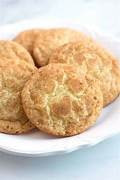
Archivist Rachel Dworkin chose Snickerdoodles as her top cookie. While taking a middle school home economics class, she and a friend were assigned this strange sounding cookie to bake. They carefully followed the recipe and to their surprise, they ended up liking them so much that every time she and her friend got together, they’d make a batch.


According to cookbook author Ann Byrn, Snickerdoodles were probably brought to the United States by early Dutch-German immigrants. They became a big hit in 1891, when Cornelia “Nellie” Campbell Bedford, a New York City cooking teacher and newspaper columnist published her version of the recipe. She called for sugar cookie dough to be sprinkled with cinnamon and sugar and baked in a tray. In the 1930s, bakers started chilling the dough and forming balls they would roll in a mixture of cinnamon and sugar.  

The cookie’s iconic name isn’t as clear. Some attribute it to the German word “Schneckennudle” which translates to snail noodles, while another insists it’s a nonsensical word created by New Englanders who were known for their silly names for cookies.

Senior Curator Erin Doane’s favorite cookie is as much about looks as about taste. She remembers her grandmother using special cookie cutters to make these masterpieces each Christmas. Her grandmother also made sure each of her grandchildren knew how to make them. So knowing how critical the tools are to the cookie, Erin tracked down the iconic cookie cutters and has adapted the cookie to reflect her mixed-faith household. Now each winter she creates her own Jolly Santa and Happy Rebbe cookies.  


The important “Aunt Chick” cutters, used to make these cookies, were the invention of Nettie Caroline Williams, a former home economics teacher. Finding too much time on her hands after she married, Williams wrote a popular food column in the Tulsa, Oklahoma newspaper under the name Aunt Chick. She also invented various kitchen items to make life easier for home cooks and presented cooking shows at Tulsa’s premier department store, Vandever’s. These were so well-received that she was asked to share them at Macy’s in New York and other venues across the nation. Her 1939 cookbook, “Aunt Chick’s Pies,” sold over 650,000 copies.

Nettie Caroline Williams

The success of her cookie cutters, invented in 1948, was that they allowed dough to keep its sculptural shape while sliding free of the cutters. These became such a hit with bakers that in 1952, Princess Margaret of England bought a set for four-year-old Prince Charles. Thanks to the royal publicity, 70,000 sets were sold in just six weeks.

Our executive director, Bruce Whitmarsh, forced to choose just one kind of cookie, selected Chocolate Chip Cookies.

Ruth Wakefield

These favorites first showed up in a 1938 cookbook, “Tried and True” written by Ruth Wakefield of Whitman, Massachusetts. For years, she had served this treat to rave reviews at her Toll House restaurant. Not a happy accident as some thought, Ruth Wakefield created this cookie intentionally. Before running the restaurant, Wakefield had taught home economics at what later became Framingham State College, where she had earned a degree.


The Chocolate Chip cookie became an instant hit and caught the attention of chocolate manufacturer Nestle’s. To promote sales of their chocolate, they created a special tool for bakers to chop their semi-sweet bars into bits. In 1939, they negotiated with Wakefield to print her recipe on the back of each package, then took it further and created the chocolate morsels or chips that bakers use today.

Office Manager Samantha Sallade’s favorite cookie is Pepperidge Farm’s Chocolate Orange Milano. Like the others, we can thank a woman for inventing these cookies.

Margaret Rudkin

In 1937, Margaret Rudkin of Fairfield, Connecticut, was looking for help. Her youngest son had asthma and reacted badly to preservatives in commercially processed foods. Her husband, was off work, having been injured in a polo game, and economic times were challenging. Her solution to all this was to bake her own bread. Women were not baking their own bread anymore, and the store options were limited. Rudkin started selling bread to specialty stores on the East Coast and a month later she had sold over 4,000 loaves of the high-end bread.

She named the company Pepperidge Farms after her family’s farm in Fairfield where she had started baking. Her products were known for their quality. By 1947, it was necessary for her to move operations and open a modern commercial bakery.

Business continued to grow, and she added other products. On a trip to Europe in the 1950s, she came across fancy chocolate cookies. Convinced she could sell something similar in the United States, she bought the rights to produce them and launched Pepperidge Farm’s Distinctive Cookies line, each named after a European city.


In addition to quality ingredients, Rudkin believed in supporting working women. She actively encouraged and hired women, and gave advice to women who wanted to go into business for themselves. In 1942 she told a newspaper, "I don't believe that there is any job women can't do," and "They handle machines as well as men and they're marvelous to work with." In the 1950s, she was called one of the 50 most powerful businesswomen by Fortune Magazine.

In 1961, Rudkin sold the company to the Campbell Soup Company for over 25 million dollars. She was the first woman invited to sit on their board.

So the next time you wait for a batch of cookies to cool, or are waiting in line at the grocery, know that history is one of the important ingredients.  As for my favorite cookie, I’ll take one of each.