Showing posts with label Archives. Show all posts

Monday, August 12, 2024

The Diarists of the 107th New York Volunteers

 By Rachel Dworkin, Archivist

The past is a foreign country, but, if you’re really lucky, you might just find a pen pal. As archivist at the Chemung County Historical Society, it is one of my great, and admittedly a little weird, pleasures to read historical letters and diaries. When it comes to the history of the Civil War, I am so lucky to work at the museum with the largest collection of diaries and letters from the 107th New York Volunteers. History can be so dry with the dates and the facts and the battle casualty statistics. Letters and diaries though are intimate. They reveal not only what happened, but how the author felt about it in ways which help you get to know them as actual human people.

Although there were multiple Civil War regiments raised out of Chemung County, the 107th is the only one to have a statue here in Elmira. The regiment was raised in the Summer of 1862 in response to Abraham Lincoln’s call for 300,000 more men. Two local congressmen, Robert Van Valkenburg of Bath and Alexander Diven of Elmira, personally raised and commanded the 1,021 men from Chemung, Schuyler, and Steuben counties.  The regiment fought at the Battles of Antietam, Chancellorsville, and Gettysburg and participated in the Georgia Campaign and Sherman’s March to the Sea. They arrived home to Elmira on June 8, 1865 to a feast, a parade, and the start of the rest of their lives.

107th monument in front of the Court House on Lake Street

Here at the Chemung County Historical Society we have the letters and diaries of 18 different members of the regiment. In some cases, we have multiple accounts of the same day or battle from multiple people. What an author chooses to include (or not) and the way that they describe it, reveals interesting things about their personality, priorities, and education. We have several diaries from the regiment which cover the start of the battle of Chancellorsville. While they describe the same events, they are stylistically quite different.

One of my favorite diarists from the 107th is Arthur S. Fitch of Company B. He was 18 when he enlisted as a corporal in July 1862 and quickly rose through the ranks. By Chancellorsville, he was a sergeant and ended the war as brevet captain. After the war, he opened a book store in Elmira and was a founding member in several veterans’ organizations. He described the first day of the regiment’s involvement in the Battle of Chancellorsville (May 1, 1863) like this:

“We had no more than got under way than the boom of the Artillery broke upon our ears not a mile in our front and we knew the ball was open. We went rapidly ahead, our Reg. having the advance. We were soon up with the artillery and the shot and shell flew over us pretty lively. No casualties, however and after an hour or two cannonading we were ordered to retire. It was only a move to feel the enemy’s position and no general engagement took place except in the left wing where the 5th Corps had some fighting. Our Reg. had quite a skirmish for our knapsacks; while out, we had laid them off before entering the woods and on returning for them we were fired upon by Rebel skirmishers. We brought them all away, however, but ran a narrow chance of being captured, as the Rebs planted a battery on the very ground we had just left before we were out of range. We got back to camp about noon, quite fatigued as the weather was very warm. Nothing more transpired until near sun down when the enemy advanced and a fight commenced. Our Regt. and the 13th N.J. were formed in the edge of a wood with the rest of our Brig. in our front. We were to support them and if they were forced to retire relieve them. Soon the Artillery joined in and then it became quite lively, the musketry volleys were rapid and we lay anxiously awaiting for our turn at the enemy, but the Indiana & other Regts. in our front held them in check and we lay quietly on our arms that night. Only casualty of Friday is Capt. N.E. Rutter of Co. I who was mortally wounded by a shell about sundown and died less than an hour after.”

Arthur S. Fitch, ca. 1880s

 Bartlet Bennett enlisted in Company E at age 25 along with his younger brother Sylvester in July 1862. He joined as a private, but was a sergeant at the time of the Battle of Chancellorsville. I don’t know much about his life before the war. After it, he lived in Elmira and worked as a railroad flagman. While Fitch practically wrote a novel, Bennett wrote a poorly-spelled haiku. “May 1, 1863, The enemy atact us; laid on arms all nite. Built brest works.”  

Bartlet & Sylvester Bennett, 1862

 Russell M. Tuttle was a 22-year-old from Almond, New York who enlisted as an orderly sergeant in the 107th immediately after graduating from the University of Rochester. He joined Company K, which was under the command of his uncle, Allen Sill. Tuttle had been promoted to second lieutenant shortly before Chancellorsville. After the war, he went on to be the editor of the Hornellsville Times and founder of the Hornellsville Public Library. His diary entry is happy medium between Fitch’s and Bennett’s.

“May 1st: Advanced on the road to Fredericksburg to cover a movement of Gen. Mead on Bunk Ford. Came back, and then went back to get knapsack. Slight skirmish. Back to camp and had a fight. 27th Ind. ahead of us. Capt. Rutter was struck by a shell. Poor fellow, a sharp fight along the line. Slept on our arms.”

Russell M. Tuttle, ca. 1860s

I keep a diary myself every night. On the scale between Bennett and Fitch, I’m more of a Tuttle.  

Monday, May 20, 2024

A Listing of Local Photographers

By Rachel Dworkin, Archivists

There were almost 50 photography studios in operation in Chemung County during the 19th century. For much of that century, there were no amateur photographers. Taking and developing photographs was a difficult process requiring expensive equipment and training, so, until the 1890s, pretty much every photograph taken in the area was done by one of the professional studios.

Each of these photographers and studios had their own makers’ marks. For us here at the Chemung County Historical Society, knowing a photographer’s years of operation is invaluable when it comes to dating their photographs. Below is a handy-dandy list of all know 19th century photographers and studios in Chemung County along with their dates and some additional information.


M.A. Breese, 1889-1890

W.M. Boyd, 1882-1884

J.M. Clark, 1860

C.C. Doty, 1863-1864

E.T. Dunn, 1866-1867

Elmira Portrait Co., 1887-1911

Elmira Portrait Company was a partnership between three artists, Herbert M. Daggett, Samuel C. Woodside, and Allen O. Adams. In addition to doing portrait photography, they also offered portraits in crayon, India ink, and watercolor. 


Elmira Portrait Company letterhead, ca. 1890s

Empire View Co., 1897-1899

Excelsior View Co., 1888-1890

C.J. Sylvester, 1890-1900

 Charles Sylvester ran the Excelsior View Company for two years before deciding to operate the studio under his own name. All our photographs of the Flood of 1889 were taken by Sylvester and have the Excelsior logo.

 C.F. Fudge, 1899-1917

W. Gulick, 1897

J.G. Harrison, 1884-1886

A.P. Hart, 1857-1877, 1880-1893

Hart & Evans, 1878-1879

Abraham P. Hart was born in Goshen, Connecticut in 1816 and came to Elmira in 1837. He was one of the first photographers in the area and certainly one of the longest running. He was still working right up until his death in January 1894.

 T.S. Hathaway, 1857-1859

Hathaway & Letts, 1860

 A.B. House, 1866-1867

J.W. House, 1860

Howe, 1882-1899

Charles Howe came to Elmira from Binghamton in 1882 and bought out the studio of N.D. Luce at 137 East Water Street. In 1899, he purchased an art supply store just down the street and became Howe’s Art Shop, specializing in photography supplies, developing, and framing.

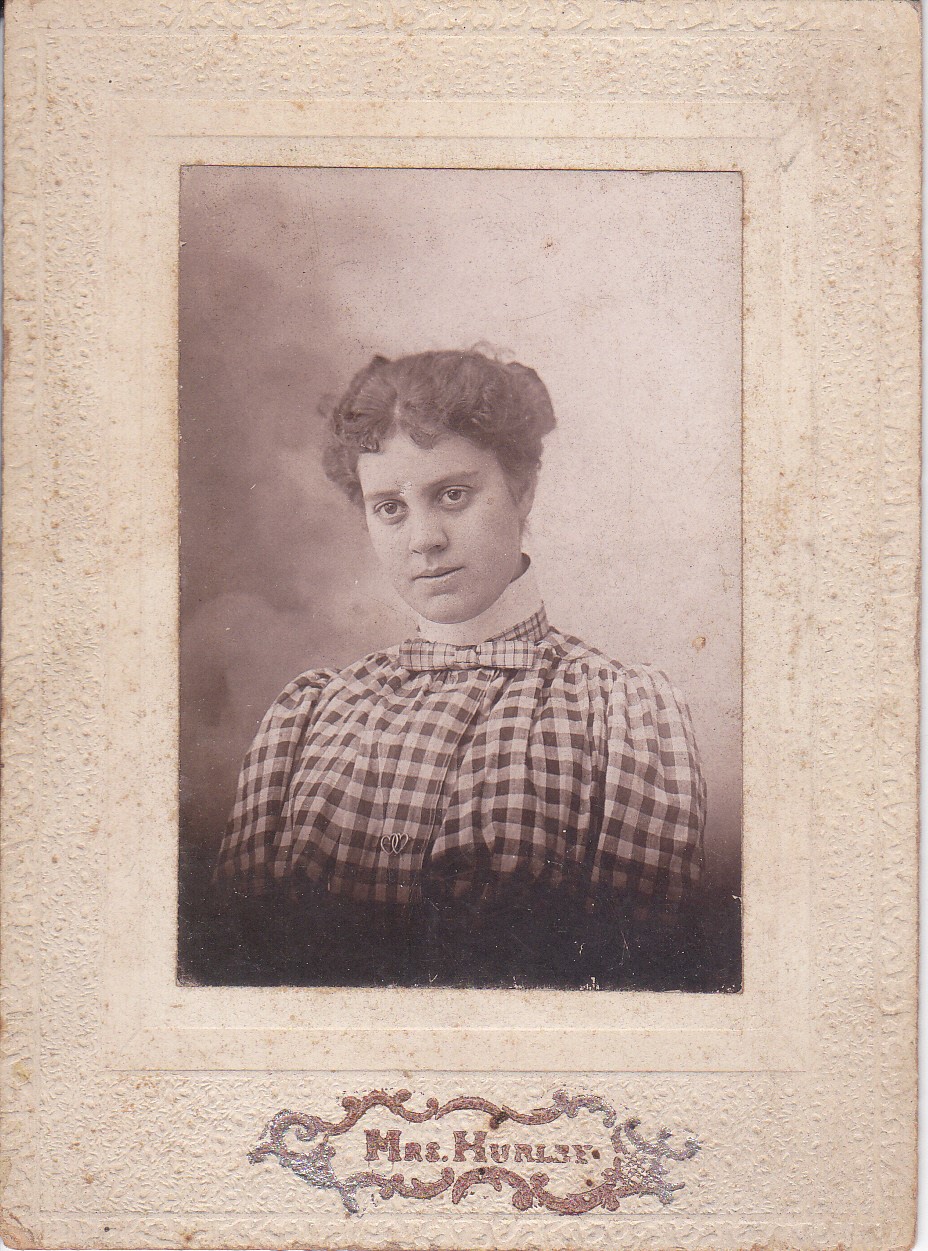
L. Hurley, 1895-1901

Lottie Hurley was Elmira’s first female photographer. She specialized in portraits, mostly of women and children, and also sold wallpaper and did interior decorating. 

Photo of a young woman by Mrs. Lottie Hurley, ca. 1890s


J.E. Kendall, 1861

Kendall was one of the few non-Elmira photographers in Chemung County. He operated in Sullivanville in Erin, N.Y.

W. Knowlton, 1866-1869

F.L. Landon, 1895-1898

J.E. Larkin, 1860-1891

John E. Larkin was born in Rome, N.Y. in 1836. He came to Elmira as a young man in 1858 to open his photography studio. He took some of the best pictures we have of the Elmira Civil War Prison Camp. He retired from photography to become the treasurer of the Elmira Mechanics Society and, later, the director of the Second National Bank of Elmira.

A. Lawhead, 1866-1867

Luce & Silverman, 1876-1877

N.D. Luce, 1878-1882

McFarlin & Speck, 1893-1896

A. McFarlin, 1897-1951

Abram McFarlin came to Elmira from Shellsburg, Pennsylvania. His studio at 158 N. Main Street, which was later demolished to make way for the Mark Twain Hotel, had previously been home to the studios of W.C. Rowley and W.A. Gulick. He specialized in portrait photography, amassing over 50,000 negatives over the course of his career.

W. Mitchell, 1863-1864

W.M. Morgan, 1895-1898

William J. Moulton, 1860-1864

E.L. Mowry, 1884-1888

New York Photo Co., 1897-1898

G. Personius, 1893-1919

Personius Studio, 1920-1945

George Personius began working as an itinerant photographer in northern Pennsylvania before settling down in an apprenticeship with Charles Howe. He eventually established his own studio in Elmira. His health declining, he sold the business to Randall H. Warne in 1945 and the Personius Warne Studio continues to this day.

W.C. Rowley, 1886-1896

H. Sartor, 1893-1910

W. Seeley, 1861-1864

A.L. Snook, 1872-1873

R.F. Snyder, 1891

D. Stamp, 1895-1905

C. Tomlinson, 1874-1891

E.M. Van Aken, 1874-1904

Elisha Van Aken came to Elmira from Lowville, N.Y. in 1874. He was eventually joined in his business by his son, Charles, who took over and re-named the studio following his father’s death. Here at the Historical Society, we have a large collection of his glass plate negatives of area views. Most photos of Mark Twain or his family taken in Elmira were done by Van Aken.

P.J. Ward, 1868-1897

For most of the 19th century, Peter J. Ward was the only photographer in Horseheads. In 1897, he was forced to sell his business to Charles Sylvester due to ill health. 

Back of photograph by P.J. Ward, ca. 1870s


J.H. Whitely, 1863-1871, 1874-1881, 1885-1895

Whitley & Denton, 1872-1873

Whitely & Harrison, 1882-1884

C. Wilbur, 1898-1900

G.H. Wright, 1890-1891

Wednesday, December 27, 2023

2023: A Year in Review

 By Rachel Dworkin, Archivist

When people ask me what I do, I tell them I am an archivist. When they stare at me blankly, I explain that it’s a subspecies of librarian. The job of a librarian is to collect, catalog, and share the information patrons need for their education and entertainment. Keeping these goals in mind, let’s take a look at how well I did this year.


1.       1. Collecting

Here at the Chemung County Historical Society, we collect items specifically related to Chemung County history, people, and organizations. In 2023, we accepted archival material from 93 donors. Some of these donations were just one or two items. For example, on recent donation consisted of the 1918 diary of Elmira Free Academy student, J. Lawrence Kolb. There was another earlier in the year that was just a poster for the Auto Thrill Show at the Chemung County Fair, circa 1970. Other donations were a bit larger. George Farr donated his research material for his book Lincoln’s Banner Regiment which contains over 100 items related to the history of the 107th New York Volunteers. A former employee at Sumirail/ABB Traction in the Heights, donated 500+ photographs documenting both companies and their products. 

Movie poster from 1937 we received earlier this year.

In addition to donated items, I also collect items related to things happening around the community. This includes newsletters from the Elmira City School District, the Foodbank of the Southern Tier, the Friends of the Chemung County Library District, and Congregation Kol Ami. I also collect programs from the plays I attend, fliers for various events, and menus from new restaurants. In this way, I’m able to capture a snapshot of what is happening now for future generations.

I also conduct oral history interviews. This year, I conducted 8 interviews. The topics included Elmira’s LGBTQ+ community; area Polish, Italian, and Finnish communities; COVID-19; and historic weather events.   

Oliver Lindblad, a 100-year-old man I interviewed in July.
 

2.      2. Cataloging

It’s all very well and good to collect things, but an archivist must take what my grad school professors called “intellectual control.” In short, an archivist must figure out what they have, wrestle it into some sort of order, and then make that order apparent to everyone else. This is known as “cataloging.” It can be a pretty time consuming process, especially when a single donation may contain hundreds of items.

To be honest, I’ve been a little behind on the cataloging this year. I’ve only cataloged about one-third of our new items. Part of the reason for the delay is that I’ve been working hard on getting our older finding aids up on EmpireADC (see this blog post for detail).  A finding aid is an index for an archival collection which provides additional context about the creator(s) of the collection and the circumstances under which the collection was created, as well as the collection’s size and organization. We joined EmpireADC this summer. Since then, I have uploaded 111 old finding aids to the site. Check it out here

1.       3. Sharing

Collecting and cataloging information is all very well and good, but it is pointless if it isn’t shared. The archives here at the Chemung County Historical Society are open to the public 1pm to 5pm, Monday through Friday. Visitors may come in and request to see anything within our collection. We are also open for researchers to call or write in with questions weekdays from 9 am to 5pm.

In 2023, we had 84 in-house researchers. This was down from pre-pandemic levels, but up from 2022. We also had 210 write-in research requests. I did not keep track of the number of phone requests, but it was well over 100. Two people requested and received permission to use our photographs in their publications.  

In addition to assisting researchers, I also find other ways to share information with the public. This blog, for instance is a pretty handy tool. This year, I wrote nine blogs. I hope you liked them. I was also interviewed by the press half-a-dozen times about topics ranging from City Hall to Iszard’s to daylight savings time. Earlier this summer, I teamed up with Maggie Young, the genealogy librarian at the Steele Memorial Library, to create a master list of genealogical resources at both our institutions. Next year, we hope to expand it to other places in Chemung County. You can find it here.

We also have several digital collections on the New York Heritage website where researchers can access material for free at any time. 

Our older collections include the records of the Thatcher Glass Manufacturing Company, the records of the Methodist Committee for Overseas Relief, Chemung County high school yearbooks, and the Black Oral History Project. This year, I received a grant to digitize and upload the records of Elmira midwife, Rose Spadaccino. I also began uploading some of our older oral histories to the site as part of a collection called “Voices of Chemung County.”

Looking back, I think I accomplished quite a bit. What do you think? For my next trick, I shall finish cataloging all the items we received in 2023, finish the shelf read, add at least one new finding aid a week to EmpireADC, upload my recent oral history interviews to New York Heritage, and have fun doing it.


Me, having fun doing it.