Showing posts with label 21st century. Show all posts

Monday, May 4, 2026

The Tale of Katie Bredehoft or How to Conduct an Investigation

 By Rachel Dworkin, archivist

Bredehoft marker, 2026


On April 14, 2026, the Chemung County Historical Society unveiled our latest historic marker on Bancroft Road. It marks the spot where a group of boys found the body of Katie Bredehoft in the creek under a bridge on January 6, 1884. She had been murdered there by her fiancé William Menken two days earlier. Bredehoft was a German immigrant and resident of New York City. She had been in Elmira for less than a week at the time of her murder. Upon learning of her story, I wondered how the police had ever identified her, let alone solved her murder.


Sketch of crime scene from Elmira Advertiser, 1884

Police today have a number of advantages when it comes to identifying unknown victims. For fresher finds, there are fingerprints. They were first used in 1882 as part of a wider system of biometric data on people being arrested collected by the Paris police department by clerk Alphonse Bertillon. By 1892, a detective in Buenos Aires, Argentina, had successfully used fingerprints found at a crime scene to identify a suspect. By the 1900s, fingerprinting became widely used. In 1999, the United States introduced the Integrated Automated Fingerprint Identification System (IAFIS). The database, which is maintained by the FBI, contains fingerprints from convicted criminals, as well as anyone fingerprinted for employment, immigration, or other purposes. Today, one out of every six Americans is in the IAFIS database. As an immigrant, Katie Bredehoft would have been in the database if she were murdered today.

DNA is another valuable tool. Like fingerprints, everyone’s DNA is distinct. Unlike fingerprints, however, the DNA of related individuals is similar enough that unidentified victims can be identified through their relatives. In 1998, the FBI launched CODIS (Combined DNA Index System), a national DNA database that includes convicted criminals, missing persons, and families of missing persons. Since 2020, immigrants have also been required to submit DNA samples for CODIS. In addition to using governmental databases, there are a couple of cases where police departments across the nation have turned to commercial DNA databases to identify both victims and criminals. In 2017, investigators used the personal genomics website GEDmatch to identify the family of the Golden State Killer, eventually leading to the conviction of Joseph James DeAngelo Jr. In 2023, police in San Diego used 23andme to find the relatives of an unidentified woman killed in 1986.

In addition to fingerprints and DNA, since 2005, the FBI has maintained a database of dental records called the National Dental Image/Information Repository (NDIR). The database contains dental records of known missing persons and unidentified remains. When someone is reported missing by their family, the police request their records and upload them to the database. When an unidentified body is found, x-rays of their teeth are crosschecked against the database. While a modern Katie Bredehoft would have been in IAFIS and CODIS, she was never reported missing. She and her killer, William Menken, were supposed to be heading to their wedding in Baltimore.

Of course, the detectives handling the Bredehoft investigation in 1884 didn’t have access to any of those technologies and database. Instead, they relied on the public to help identify her. On the Monday after her body was removed from the ice, it was taken to the morgue where literally hundreds of people were invited to come view it. She was placed, frozen, in a doorway adjacent to a hallway through which the viewers would pass. On the Wednesday following her discovery, local photographer Charles Tomlinson took a series of photographs of her face and body.

In the end, the method bore fruit. Mrs. Tubbs, a housekeeper at the Delaware, Lackawanna & Western train depot, recognized Bredehoft as one half of a couple that she had seen getting off a train the morning of January 2nd. Another woman, Mrs. Kelly, who ran an eatery where the couple had stopped for lunch on the day of the murder, also recognized Bredehoft. Moreover, she provided the clue that lead to the identification of her killer. William Menken had a nasty scar and glass eye. While at Kelly’s eatery, he asked her if Norton still lived in the area.

Sketch of Menken & Bredehoft from Sunday Tidings, 1884
 

As it turned out, William Menken had been imprisoned at the Elmira Reformatory for burglary until 1882 when he was paroled to work under supervision at the nearby Norton farm. Thanks to the carefully maintained records at the Reformatory, officials were able to quickly identify Menken as the man seen with their unidentified victim. They tracked him to his sister’s home in Flatbush, New York. Detectives in New York City quickly learned that Menken had been courting a Miss Katie Bredehoft. Using Tomlinson’s photographs, her younger sister, Mary, confirmed that the body found in Elmira was that of her sister. Within four days after the discovery of her body, the police had found her killer and successfully identified her body thanks, not to forensic technologies or databases, but to the power of crowd sourcing.

Menken was tried and convicted twice for the murder. The first time was in Elmira, but verdict was thrown out when it was learned that the jury had gone to inspect the crime scene themselves. A new jury was impaneled in December 1884 in Binghamton. They too found him guilty. He was hanged on July 2, 1885.

Friday, June 23, 2023

Elmira’s Gay Bars

 By Rachel Dworkin, Archivist


Since the 1600s, there have been bars and clubs catering to LGBTQ clientele in most major European cities. Today, such establishments are generally known as gay bars, even though they cater to more than just gay men.  In the United States, there are a number of bars all claiming to be the first gay bar, most of which date back to Prohibition and the 1920s or 30s. They are predominantly located in major East and West Coast cities like New York, San Francisco, and Los Angeles.

Elmira’s first known gay bar was Mary’s Grill at 112 Lake Street. It was owned by Mrs. Marion Stumpf and opened on November 2, 1967. The bar didn’t exclusively cater to the LGBTQ community, but it was welcoming of them. I recently interviewed two gay gentlemen who specifically mentioned Mary’s as their entry into the gay bar scene. Mary’s Grill remained in operation until around 1980.

Star-Gazette, September 29, 1972


The David, owned by John “Jack” Westervelt from 1972 to 1998, catered exclusively to the gay community. It was first located at 203 1/2 Railroad Avenue before moving down the street to 511-513 Railroad Avenue in 1975. Westervelt himself was gay and wanted to create a space where people could come and be themselves. One of the former patrons recalled it as a fun place to meet other members of the LGBTQ community. In addition to offering drinks and some food, The David hosted drag shows by the Legendary Children, a local troupe of drag performers.  The bar closed in 1998 when Westervelt retired.

Historically, gay bars across the nation were heavily involved in the gay rights movement. When the gay rights movement began in the late 1960s, homosexual acts were criminalized in every state except Illinois. Gay bars were frequently raided by police. In fact, a police raid on the Stonewall Inn in Greenwich Village, New York, is the event which inspired the Gay Pride movement. Gay bars became a place, not just to drink and meet people, but to organize and resist. As the AIDS epidemic worsened in the 1980s and ‘90s, many bars became involved in fundraising and safe-sex education.

I haven’t been able to uncover any information about the extent to which The David or its clientele were involved in the gay rights movement. Bar owner John Westervelt was himself part of the movement. During the 1970s, he participated in a series of panel discussions about homosexuality and the gay rights movement at Elmira College.

In 1999, Steven West and Barry Johnson opened a new gay bar, Angles at 511-513 Railroad Avenue. It billed itself as an “alternative dance club” welcome to all and regularly hosted events like trivia and karaoke. It was huge in the drag scene, regularly hosting shows as well as the annual Mr. & Miss Southern Tier contests. It closed in 2008.

Angles bar, exterior, courtesy Star-Gazette

Angles bar, interior, courtesy Star-Gazette


Elmira’s last gay bar was Club Chill, owned by Clinton “Billy” Lewis from 2004 until his death in 2011. The club offered dancing, drinks, and regular drag shows. It took over the Mr. and Miss Southern Tier drag contest after Angles closed.  Club Chill management was invested AIDS relief, hosting charity benefits for the Chemung County AIDS Task Force. The club regularly participated in local Pride events as well.

Star-Gazette, September 24, 2004

 LGBTQ history is seriously under-documented. Everything in this article is based on a pair of oral history interviews and what I could glean from the newspapers. If you have stories you would like to tell about any of the above-mentioned bars or have images or artifacts associated with the local gay community, I would love to hear from you. You can reach me via e-mail at archivist@chemungvalleymuseum.org or phone at (607) 734-4167 ex 207. I look forward to hearing from you.

Monday, October 31, 2022

Capabilities and Disabilities

by Rachel Dworkin, archivist

October is National Disability Employment Awareness Month, but, for disabled workers, employment can be complicated. When the Fair Labor Standards Act of 1938 established the country’s first minimum wage, it included exceptions for tipped workers, prisoners, agricultural workers, and “persons who by reason of illness or age or something else are not up to normal production,” i.e. disabled workers. The law radically altered the employment prospects of disabled workers, and not always in good ways.

In October 1955, the Chemung County Committee for Help for Retarded Children decided to open a sheltered workshop to provide employment for disabled workers. They called their new workshop Capabilities, Inc. The sheltered workshop movement began shortly after the passage of the Fair Labor Standards Act of 1938 and really picked up steam in the post-war 1940s as a way for disabled workers to learn or, in the case of wounded veterans, re-learn the skills necessary for gainful employment. Like the proposed Chemung County workshop, they were often run by charitable organizations.  All of them paid their workers subminimum wages.

Capabilities, Inc. struggled in the early years. Grants and charitable donations kept them more or less afloat, but they struggled to find paying clients or steady work for their employees. They also struggled to find good employees. They went through four managers in two years and were forced to implement an employee screening process as it soon became apparent that some people were simply not physically or intellectually capable of industrial labor. Finding the right workspace and equipment also proved to be an issue.

In 1960, the Elmira Rotary Club became involved. They donated land for a new facility at 1149 Sullivan Street. A local architect associated with the club donated his time to design a new building free of charge. Two area foundries donated over ten thousand yards of fill needed to level the ground, while the City of Elmira provided power shovels and graders to do the work. The last load of fill was delivered on Christmas Eve. Construction began on February 27, 1961 with various business and labor organizations providing either free labor or building supplies. Once the building was complete, several local manufacturers donated gently-used machines and equipment. In May 1961, Capabilities moved into their new workspace and business quickly grew. 

1149 Sullivan Street

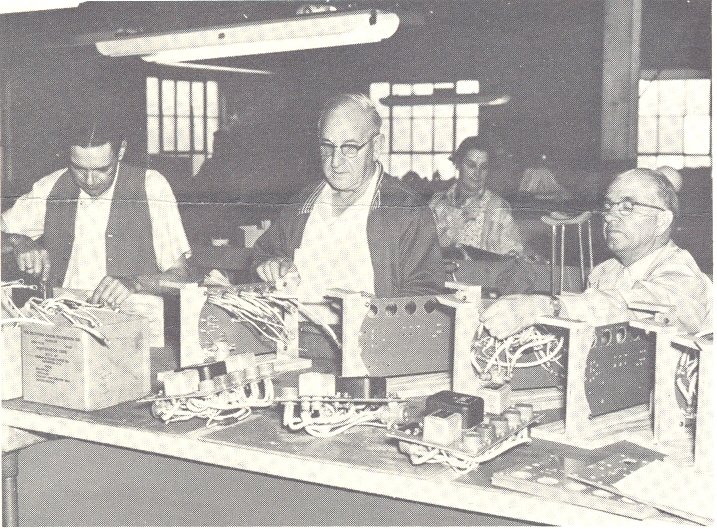
 Despite being originally proposed to help those with intellectual disabilities, by the 1960s, Capabilities only hired those with physical disabilities. New hires were evaluated on their existing skills and were set to perform different tasks to see which department they were best suited for. By that time, Capabilities had a wood-working department, small machine shop, electrical and mechanical assembly departments, secretarial department, and sewing shop. In 1963, New York State selected Capabilities as a pre-vocational evaluation unit and training site. Under this new system, workers who performed well enough would be encouraged to find regular employment within the wider community after a 16- to 26-week period of personal adjustment training. 

Electronics assembly shop, ca. 1960s

In May 1975, a group of 46 disabled workers at Capabilities signed a petition objecting to the working conditions associated with the training program. They argued that the training was a “joke” and that they were not being hired for outside positions. Workshop officials, they claimed, treated them poorly and were often rude and demeaning and they called for several of them to be fired. The biggest issue though was the pay. In 1975, regular hourly minimum wage as $2.10. For disabled workers, it was 35 cents. For workers being paid by the piece, their wages were calculated as a percentage of what a non-disabled worker could make which meant that they could make just pennies a day. No wonder they were upset! Although some of these issues were resolved, one former employee reported receiving subminimum wages when she worked there in the 1990s.

Sewing shop, ca. 1960s
 

The sad fact is that Federal law still allows employers to pay disabled workers subminimum wages. Currently, the regular Federal minimum wage is $7.25 per hour, but the disabled minimum wage is just $3.34. Training programs at sheltered workshops are common, but a 2001 study by the Government Accountability Office found that only 5% of disabled workers actually graduate from sheltered workshops to full-pay employment in the wider world. This is especially true for those with intellectual disabilities.  Within the last decade, New York State has taken steps to improve conditions for disabled workers. Under state law, disabled workers must be paid at least minimum wage and the state offers a Workers (with Disabilities) Employers Tax Credit to business which hire disabled workers.

Meanwhile, Capabilities is still going strong. They continue to offer pre-vocational training to people with both physical and intellectual disabilities. In addition to these services, Capabilities also runs several businesses including a print shop, an upholstery shop, and a machine shop located at 1149 Sullivan Street, plus Elmira Tea and Coffee House cafe on Water Street, and a custodial service. The workers are all paid at or above minimum wage. 

ETCH menu, 2020


Monday, September 21, 2020

The Last Video Store

by Rachel Dworkin 

The Family Video on College Avenue is closing. The other weekend, I stopped by to pick up some of their old stock on the cheap. Is it streaming, I asked the manager, or the pandemic? It’s both, he said. It’s a lot of things.


Family Video, September 2020

 Video stores and I grew up together, so it’s a little sad to be writing their obituary. The first home video store opened in 1975 in Germany with a guy renting out his personal collection of Super 8 films before video cassettes were even invented. Two years later, the first American video store opened in Los Angeles, California after 20th Century Fox began licensing their films for video cassette. From there, the phenomenon exploded. The first video store in Elmira was Rent-a-Flick at Diven Plaza, opened in 1982. Within just three years, there were dozens of places to rent videos around the county. By 1985, there were 15,000 dedicated video rental stories in America with several thousand record, drug, and grocery stores also renting tapes.

My parents were members of a rental club run by a home electronics store near our house. The membership model was a popular one, especially if you didn’t own a VCR. Rent-a-Flick, Little Joe’s, T & C World of Video gave club members discounts on video and machine rentals. In 1985, local membership rates ranged between $19.95 and $39.95 a year. Elmira Home Theatre in West Elmira, however, specifically marketed itself as a non-membership store that charged a flat rate to everyone.


Courtesy of Elmira Star-Gazette, June 25, 1985


Area residents could get videos at a number of other places outside of video stores. The Super Duper in Elmira, Minier’s in Big Flats, and, oddly enough, the U-Haul in the Heights all had videos. In September 1985, Gerow’s Dairy on Ithaca Road in Horseheads installed the county’s first video tape dispensing machine as a way to draw in customers. Most of these side-business rental outfits were a lot cheaper than the dedicated video stores. The Rite Aid on Main Street, for example, initially rented tapes for just 49 cents, while Elmira Home Theatre charged $1.87. The basic idea was to lure renters in and get them to buy other stuff.

The 1980s were the golden age of the video store. Chemung County went from 1 in 1982 to 14 by the end of the decade. Nationally, there were over 25,000 dedicated video stores and 45,000 places with rental side businesses. In 1989, the revenue from rentals surpassed that of theaters for the first time. It’s no surprise really. The average price for a movie ticket at the time was $4. Paying just $1.87 instead of $16 to entertain a family of four was a no-brainer, especially when you had the power to pause for pee breaks. While renting was cheap, actually owning your own video tape was prohibitively expensive. They cost anywhere between $50 and $75, which meant that no one was starting their own video libraries. During the first decade of their existence, VCRs cost anywhere between $1,400 and $500, hence why people rented them as well.

Video King Super Store, Horesheads, courtesy Elmira Star-Gazette, April 25, 1992

                                         
 Prices fell rapidly for both during the 1990s. It was around that time that my family started to build our own little library of favorites. Video stores didn’t decline during this period, exactly, but they did sort of consolidate and plateau. A lot of the small grocery and drug stores got out of the rental business, while a lot of the small, independent stores got bought out by large chains like Blockbuster and Hollywood Video. In Chemung County, there went from being 13 video stores in 1990 to 8 in 2000. Video Loft, the last of the Elmira independents, consolidated its locations in 2003 before going out of business in 2007.

Video Loft on South Main, courtesy Elmira Star-Gazette, June 10, 2003 
                                            

 The Family Video dying today first opened in that same year, but the poor thing scarcely stood a chance. Industry experts were already talking about the dangers posed by Netflix’s DVDs-by-mail service. And then came online streaming and cable videos-on-demand.  The Hollywood Video on South Main closed in 2010, as did the Horseheads Blockbuster, leaving Family Video as the last store standing. Then the pandemic came along to shoot it in the head. Sure, they reopened for business soon into the shut down, but no new theatrical releases meant no new video releases. Why get off the couch when there’s nothing new? The Family video may soon be gone, but, if you can still rent new releases at RedBox, not mention old favorites at the library.

Monday, June 8, 2020

The Fierce Urgency of Now

by Rachel Dworkin, Archivist

By now, you may have noticed that we are living in unprecedented times. A global pandemic has killed more Americans in three months than died in the Vietnam and Korean Wars combined. That same pandemic has paralyzed our economy and caused record levels of unemployment not seen since the Great Depression. Citizens in every state in the nation, including right here in our community, are in the streets protesting the murder of Blacks by police and the president has threatened to use the military to put down those protests by force. We stand at the precipice of something. We are living history.

The mission of the Chemung County Historical Society is to collect, preserve, and share the history of our county, but history isn’t just the stuff in grandma’s attic. History is happening right now. In order to capture history in the making, we have launched the COVID Memory Project. We’re collecting oral histories, photographs, videos, diaries, and objects associated with the pandemic and protests. 

Here’s how you can get involved:

Oral Histories

So far, I have collected several oral histories including one from a high school senior and one from my religious leader. We’re hoping to get stories from health care workers, teachers, school administrators, grocery store and other essential retail workers, restaurant owners, someone working from home, someone laid off, someone who was sick, someone who lost someone, someone with small children, someone elderly, and anyone with a story to tell. If you fit into any of those categories and would like to participate, please contact me at archivist@chemungvalleymuseum.org or by phone at (607) 734-4167 ex. 207. Don’t worry about maintaining social distance. We’re set up to do interviews over Zoom or the phone. 


Patrick Hemenway, our first interviewee!

But wait, there’s more! If you’ve got a cell phone, microphone, or camcorder, you too can can be an oral historian. Interview your friends, neighbors, and relatives about their experiences. Contact me or check out StoryCorps (https://storycorps.org/participate/) for suggestions and recording apps. If you’re shy about doing interviews, we’re also looking for folks to listen to and help transcribe the ones that have already been collected. 

Photographs & Videos
In the first month of the pandemic, there were inspirational chalk drawings everywhere in my neighborhood. A man a few blocks over would practice his bagpipes in his driveway while people sat on their porches to listen. There are signs everywhere reminding people to wear masks, be hopeful, and stay strong. I’ve been going around with my camera to document it all the best I can, but I haven’t been able to catch everything. Bagpipe man, for example, keeps eluding me. 


Legion Park, Elmira Heights


We’re looking for a proactive team of historians willing to go out and take photos or videos around the community while keeping track of where and when those photos were taken. Please contact me for details and instructions if you’re interested. If you already have photographs or video footage of the things going on in your neighborhood, things you’ve been doing to stay sane, or the protests, we would love copies. 

Diaries

I’ve been keeping diaries for years, so you know I’ve been writing about what it’s like living under COVID. Come the end of the year, I will be donating a copy of my 2o20 diary to the museum and I plan on willing my entire diary collection to the museum after I die. If you too have been keeping a diary of this year’s goings on, please donate a copy. You don’t even have to make the copy yourself. Just plan on bringing your diary in during the first few weeks of 2021 and we’ll do it for free.

Objects

Do you have lawn signs, protest signs, or masks? We want them. Does your business have a special COVID menu, a reopening policy, or new employee guidelines? We’d like that too. 


Lawn sign, W. Church Street, Elmira

We’re smack in the middle of a pivotal moment in history. The staff at CCHS are doing all we can to document it, but we need your help to capture it all. I look forward to working with you. 

Monday, May 7, 2018

Scrapbook Nation


By Rachel Dworkin, Archivist

Do you scrapbook? No? Are you sure? Have you ever shared something on Facebook, reblogged something on Tumblr, or created a Pinterest page? Then congratulations: you’re a scrapbooker!  

Digital scrapbooking is everywhere these days and it presents some unique preservation challenges for archivists like me. For one thing, these digital scrapbooks don’t physically exist. They’re just a collection of ones and zeroes floating around the internet. These scrapbooks aren’t owned by their creators, but by the various platforms who host them and, if they shut down, the scrapbooks are lost forever. Don’t believe Facebook will ever fold? That’s what 38 million GeoCities users said. Boy were they surprised when the site was shut down in 2009. 

Of course, it can be tricky caring for old-fashioned, analog scrapbooks too. Here at the Chemung County Historical Society, we have over 200 scrapbooks. Many of them contain highly acidic newspaper clippings which have turned yellow and brittle with age. A lot of them have other mixed material including photographs, programs, flowers, and human hair. Each of them are as unique as the individuals who created them and reflect their tastes and interests. We have scrapbooks on, among other things, wildflowers, local crime, local clubs, various wars, and baseball.

All this month, we will be highlighting different scrapbooks from our collection. Stay tuned and enjoy. Oh, and don’t forget to share and reblog on your own digital scrapbook.