Showing posts with label Robert Peary. Show all posts

Friday, October 15, 2021

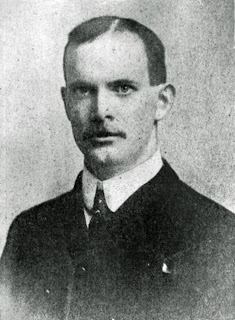
Ross Marvin Revisited

by Erin Doane, Curator

Ross Marvin’s story is one of tragedy and mystery. Perhaps that’s why I go back to it again and again in my research, writing, and exhibits. Back in 2013, I wrote a brief blog post about him that you can read by clicking here. After eight years, it seems like it’s time to revisit Ross Marvin’s story.

Ross Gilmore Marvin
Ross Marvin was born on January 28, 1880, the youngest of six. He graduated from EFA in 1899, and surprised everyone by earning a scholarship to Cornell University. In 1901, he transferred to the New York Nautical School where he learned nautical astronomy. After graduating from there a year later, he returned to Cornell. In 1905, he graduated with a degree in civil engineering. Before finishing school, Marvin had heard about the Arctic voyage that Robert Peary was planning for 1905-1906. He made it his goal to be part of that expedition. It is said that on graduation day, he received the letter from Peary inviting him to join his team.

Peary’s 1905-1906 attempt to reach the North Pole was not a success but he tried again two years later. Marvin served as chief scientist and Peary’s first assistant on that 1908-1909 voyage. His responsibilities included taking meteorological readings, solar observations, and depth soundings.

According to the caption of this image from an article written by Peary that appeared in the August 1910 issue of The Geographical Journal, that pile of furs is Ross Marvin taking observations at 86 degrees 38 minutes north on March 25, 1909.
Peary purportedly reached the North Pole on April 6, 1909, but Ross Marvin did not survive the journey. His two Inuit companions, Kudlooktoo and Harrigan, reported that on April 10 he broke through the ice while trying to cross a lead and died. It was weeks before Peary and the rest of his men learned of Marvin’s death and it wasn’t until September, some five months after his death, that his family back in Elmira heard the news.

The story of Ross Marvin may have ended there with the local hero’s tragic death, but 17 years later, his name was back in the news. In 1926, Kudlooktoo confessed to killing him. He claimed Marvin went crazy and tried to abandon Harrigan on the ice. Knowing that Harrigan would die if he was left behind, Kudlooktoo shot Marvin.

Kudlooktoo posing with George Borup and other Inuits, from A Tenderfoot with Peary, by George Borup, 1911
The story came as a great shock to those who knew Marvin. His family denounced the story and Peary declared that he didn’t believe it. Peary’s daughter, Marie, who had been a childhood playmate of Kudlooktoo, believed his false confession was induced by religious hysteria and was an attempt to please the white man by having a sin to confess. By that point, 17 years after the fact, there was no way of proving what had truly happened. The Arctic was a sort of no-man’s land at that time with no laws or governance, so Kudlooktoo was never tried for murder. 

Despite the dark turn of Marvin’s story, his life and accomplishments have been memorialized in many ways over the years. Peary erected a stone cairn with a wooden cross at Cape Sheridan overlooking the Central Polar Sea in his honor.

Marvin Memorial, Cape Sheridan, Left from The North Pole, By Robert E. Peary, 1910
Right from Susan Kaplan/Genevieve LaMoine, Peary-MacMillan Arctic Museum at Bowdoin College, 2011
In 1910, a large stone with a brass plaque was set on the corner of Lake Street and Union Place in Elmira as a memorial. It has been moved a couple of times since then and now rests at the corner of Lake and Church Streets by the Chamber of Commerce.

Ross Marvin Monument at the corner of Church and Lake Streets
In the late 1920s, a memorial tablet to Marvin was placed in the Sage Chapel at Cornell University.

Dedication of Ross Marvin plaque at Cornell University, c. 1926, Sunday Telegram, April 5, 1931
In 1943, Marvin’s niece Gertrude Colegrove Tum, christened the SS Ross G. Marvin, a liberty ship that was used for cargo transports during World War II. You can read all about that by clicking here.

In 1948, Marvin and all the other men who had served on Peary’s 1908-1909 Expedition were awarded medals by the U.S. government. I have heard that the reason it took so long – nearly 40 years – to be officially recognized for their efforts in reaching the pole was because there were some in congress who did not want to honor Matt Henson, who was an African American, along with the rest. 

Peary Polar Expedition medal awarded posthumously to Ross Marvin, 1948
The Marvin Islands, a group of islands in extreme northern Canada were named after him. In 1957, the Elmira Lions Club dedicated Ross Marvin Park on the triangle of land between Lake Street and Union Place. In 1967, the State University Maritime College, from which Marvin graduated in 1902, named a wing of their new Science and Engineering building Ross G. Marvin Hall. And finally, in Woodlawn Cemetery, in the Marvin family plot, is a stone dedicated to him. The inscription on the stone reads:

 In Memory of
Ross G. Marvin
Jan. 28, 1880 – April 10, 1909

 Scientist with the Peary Arctic Expedition
Which discovered the North Pole
Drowned in the Arctic Ocean Lat 84 degrees North

 Peacefully he sleeps in his watery grave.
Tho no marble shaft marks his last resting place
it is watched o’er by towering sentinels of snow and ice.
The stars too keep silent vigil while the north winds
sing a requiem for a brave soul gone to meet his maker.

Ross Marvin marker in Woodlawn Cemetery, 2018
If you have made it all the way to the end of this post, thank you! I hope you enjoyed this and other stories I have told during my 10+ years as curator at CCHS. This is my very last blog post here. I will be leaving the museum at the end of October. It’s been a great joy learning about the county’s history and being able to share it with all of you!


Monday, December 14, 2020

Souvenirs from a Doomed Voyage

by Erin Doane, Curator

The purpose of the Lady Franklin Bay Expedition from 1881 to 1884 was to establish a polar research station near Lady Franklin Bay on Canada’s Nares Strait north of Greenland. The expedition was funded by the U.S. Congress, managed by the U.S. Army Signal Corps., and led by Lieutenant Adolphus Greely. Twenty-five men began the voyage into the Arctic in 1881, but only seven,* including Greely, survived. Uncooperative weather, poor planning, unsuccessful resupply attempts, interpersonal conflicts, and all around bad luck led to disaster. (You can read about it in more detail here.)

No one in the expedition had strong connections to Chemung County (that I am aware of), so why am I writing about it? Well, the museum has a collection of 19 items that are labeled “Greely Expedition 1881-1884.” Later Arctic explorers collected these souvenirs from the doomed voyage. The items include tobacco tins, a pipe, a lid to a brandy keg, various size ammunition, pieces of rope and chain, and fur mittens purportedly used during the Lady Franklin Bay Expedition and abandoned at Fort Conger in the northeast of Ellesmere Island where Greely had set up his basecamp in 1881.

Selection of items in the collection marked "Greely Expedition 1881-1884"

So, how did these items get to CCHS? One of the pieces, the brandy keg lid, has this description in the database:

Brought back by Ross Marvin while on his 1905-1906 Arctic expedition with Admiral Robert E. Peary. This lid from a brandy keg is from the HMS Alert, a British Navy ship that was part of an 1875-1876 British Arctic Expedition. They reached Ellesmere Island. Then the Greely Expedition in 1881 reached the same spot on Ellesmere Island, but the expedition became infamous because only 6 of 24 members survived.* In 1905-06, Admiral Peary's expedition stopped at the same spot and found the site where Greely had been. Ross Marvin brought back relics from the site.

Wooden keg lid with the words “HMS Alert” and “Brandy” just discernible

Elmiran Ross Marvin was a member of Robert Peary’s 1905-1906 and 1908-1909 Arctic expeditions. (You can read more about him here.) Marvin kept journals during both voyages and wrote about finding the keg lid on September 2, 1905:

…Found the remains of a cache made by English Party, H.M.S. Alert, on northern shore of bay. Contents were used later by sledge trips of the Greely Party. Found one box containing 9 tins of boiled beef, frozen and well preserved. Secured head of an old cask…. 

Ross Marvin’s journal, September 2, 1905

I feel confident that the “head of an old cask” he found among the remains of the HMS Alert’s cache is indeed the wooden keg lid in the collection. While the lid did not originate with the Greely Expedition, it was among the other items found at Fort Conger. Marvin’s journal entry from September 5, 1905 mentions that he “found a souvenir for myself,” but does not go into detail. There is no way of knowing if he was referring to any of the other items we have here at the museum.

The other items in the collection may not have been collected by Ross Marvin at all. A general note on the collection reads:

Professor Donald MacMillan of Peary's expedition found the remnants of Greely's base camp at Fort Conger. The items here were brought back from Peary's expedition by Donald MacMillan.

This note made me wonder. I have done quite a lot of personal research on Ross Marvin, his two expeditions into the Arctic with Peary, and his untimely death there in 1909. I had never read anything indicating that MacMillan ever came to Elmira, let alone donated a collection of objects to the Historical Society. Donald MacMillan (who later became a significant Arctic explorer and researcher in his own right) was on Peary’s 1908-1909 Arctic expedition with Ross Marvin. He certainly would have had the opportunity to collected souvenirs that had been left behind on previous voyages as Marvin had done three years prior. But how did those items end up here?

I found a clue to this mystery when I learned that MacMillan was a longtime friend of James Vinton Stowell. Stowell was an Elmira artist, archaeologist, and explorer. He traveled into the Arctic four times, including once with MacMillan in 1946 to Northern Labrador. In 1967, Stowell donated his extensive collection of Native American and Arctic artifacts to the Chemung County Historical Society.

The Seal Hunters, oil on canvas by James Vinton Stowell, 1958

Since Stowell donated one collection of items to the museum, was it possible that sometime along the way he made another donation of items that had been collected by MacMillan during his voyage with Peary in 1908-1909, then given to Stowell as a gift to a fellow polar explorer and friend? Maybe. Maybe not. There is no proof of such a thing, but it is fun to speculate about how such an interesting collection got here. 


* I have found sources that say six men survived and others that say seven. Naval History Magazine; International Journal of Naval History, and the New England Historical Society all have articles that indicate seven men survived; PBS, the National Museum of American History, Nature Magazine have articles indicating six survived. I’m not sure which is correct. Similarly, some sources report that there were 24 men on the voyage, others 25.