Showing posts with label Smithsonian. Show all posts

Monday, September 15, 2025

We the People

by Susan Zehnder, Education Director

In 2004, the United States Congress passed 36 U.S. Code § 106  which recognized September 17th as Constitution and Citizenship Day. The purpose was to promote literacy and understanding of the American constitution.  While not a federal holiday, the law asks “each educational institution that receives Federal funds for a fiscal year (to) hold an educational program on the United States Constitution on September 17 of such year for the students served by the educational institution.”

Does it count if we started things in July? On the 3rd of that month, CCHS held a community event at the Clemens Center to increase awareness of an oft quoted and important historical document. We called it the Constitution Read because that’s what took place: community members read aloud the entire constitution. We had invited anyone interested in reading, and available to join us, asking that they were 14 years old and up (future voters in four years) and that no one wore political buttons, hats, or t-shirts to the event. 45 community members signed up. Everything went smoothly. We were grateful to the Clemens Center staff and volunteers for helping us and to the audience of readers, friends, and family who stayed to listen. Reading the entire document, all 7,686 words, took an hour. When a section of the document had been changed or amended, we let everyone know by holding up a sign. The event was filmed and many readers shared that it was their first time hearing the whole thing, and asked when we would do it again. In the months since, groups from two southern states have contacted us wanting to know how they could do something similar.

Constitution Read event

Recognizing the importance of the constitution by having a special day was the brainchild of Louise Leigh. Born in 1914 in Gloversville, NY, she moved to Southern California to work as a medical technologist. Leigh became politically active with Republican causes and was appointed Presidential Elector, Delegate to two National Republican conventions, and served as the California Republican Assembly Historian. When she retired from her medical work in 1997, she taught English to immigrants, tutored children, and started a campaign to improve constitutional literacy. Her work was recognized and honored by various political and civic organizations including the Southern Division Federated Republican Women, Daughters of the American Revolution, and the National Center for Constitutional Studies.

In October, CCHS will continue to do our part to promote constitutional literacy. Starting October 3rd, until November 15th, we are hosting Voices and Votes: Democracy in America from the Smithsonian Institute's Traveling Exhibition Services. It is a detailed look at some of the complex issues surrounding our country’s vision and understanding of democracy. To go along with it, our Senior Curator and Archivist have put together an exhibit connecting local and national issues. We also have programs to share more information about the exhibit and the topic in general. On October 8th at noon, CCHS staff will talk about hosting the exhibit. On October 21st at 7 pm, Dr. Danny Lempert, a former political science professor and current Cornell University law student, will be speaking on “The Voting Rights Act of 1965: Past, Present, and Future.” On the evening of October 23rd, we are running a game night using materials from the exhibit to spark community conversations. On November 12th, at noon, members of the Chemung County Board of Elections will be sharing a behind the scenes look at what they do. Inspired by the exhibit, we are working with the Arnot Art Museum and holding a Vote! poster contest. Poster submissions are due in December and more details can be found in our exhibit and on our website. And not to be left out, all Elmira City School District first graders will again be creating flags to hang on display in our museum.  

Flags from last year's First Graders

The film recorded at the Constitution Read will also be showing in the galleries. We invite everyone to come explore the exhibit, participate in discussions, and try out the games. What does it mean to vote? Whose voices are heard? Who is an American? We may not all agree on the answers, but asking the questions offers us a chance to better understand our country and each other: we ARE the people of this great country.

Voices and Votes: Democracy in America will be on display to the public October 3 – November 15th Monday through Saturday, 10 am to 5 pm. To get the latest CCHS information, sign up for our e-newsletter by writing to CCHS@ChemungValleyMuseum.org for more information.


Monday, September 9, 2024

New Project with the Smithsonian

 by Susan Zehnder, Education Director

There is no life that is not geographic.

-Ruth Wilson Gilmore

I heard this statement back in July at a workshop for the first group of educators involved in a new Smithsonian program. Another way to put it is who we are is shaped by where we come from, and that is what participating students in Chemung County will be exploring this fall in the Smithsonian’s Democracy in Dialogue, Virtual Exchange program. They will connect with other students from across the nation to talk about how our local history shapes us.

The Smithsonian designed the program to be part of the national celebrations around the 250th founding of our country, coming up in 2026. They intend for educators to foster conversations and connections among young people, 13 to 18 years old, from different parts of the nation, to build a deeper understanding of what makes us the same and what makes us different. The first group of facilitators in the program consists of 20 educators, all classroom teachers except myself as education director of the museum, and a librarian in Idaho. Eventually there will be 80 facilitators across the nation.

Students here in Chemung County have been paired with students from a school in Laramie, Wyoming over 1,700 miles away. 

The student conversations will take place virtually. Over the fall semester, they’ll also be sending things to each other through the mail as they get to know each other. My co-facilitator in Laramie and I have chosen the theme of The Ordinary Becomes Extraordinary as a way for students to think about local history they want to share.  We’re having them start by introducing themselves through a chosen object, one that means something to them, and then sharing with the group.

To introduce myself, 

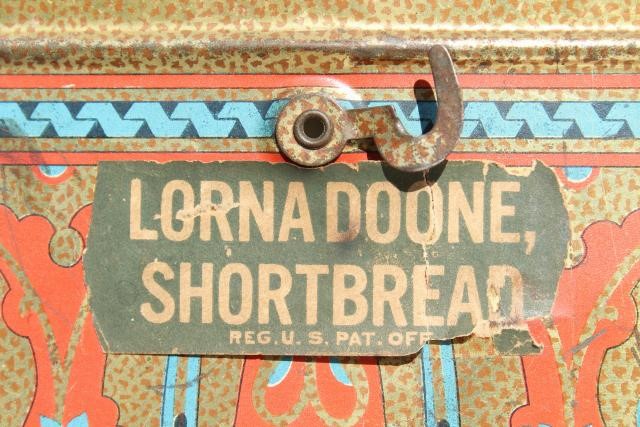
I’ve chosen a treasured button box that I inherited from my grandmother. It is a 6-inch -tall, highly decorated metal box with a thin metal handle and attached lid. Long ago, in the 1920s, it held cookies and part of the Lorna Doone shortbread label is still visible. 


When shaken, it makes a rattling sound because, as long as I’ve known it, it’s held buttons. So many buttons, that the box is full. The buttons are extras or cast offs from clothes my mother and grandmother made, or ones that I purchased while making my own kids’ clothes or Halloween costumes. The buttons remind me of my mother and grandmother. They remind me of clothes that were made for me, or clothing I’ve sewn.  They remind me of people I love and the joy of creating something special for someone who loved me.

My artifact tells a story of women creating. Our students will be exploring artifacts in our collection, and  will have virtual access to collections in the Smithsonian. They’ll be selecting an ordinary object, like my cookie tin, or a person, place, thing, or an event that has had an impact on others. They'll share that story by creating a 3-to-5-minute movie that the Smithsonian has the option to post on their site, and that we will post on our social media.

As an example, consider the story of John W. Jones, a compassionate and hard-working man who overcame many hardships in his life, and what he did as a conductor on the Underground Railroad, stewarding people to freedom, and what he did as he carefully buried the soldiers that died at the Civil War Prison Camp, helped shape Elmira’s identity. He wasn’t from Elmira, but is buried here and his story is woven through Elmira’s history.

We are excited to see how local history and geography inform what the students choose to share with each other and what they create to add to the American story. Already, some of the students were interviewed on local television. 

At the project's conclusion, we will be sharing their work on our social media. The Smithsonian has the option of sharing their work too!

The project has begun, but there is still room in the program for interested students. Please help spread the word about this amazing opportunity taking place this fall. Students can expect to spend about an hour a week and must be between 13 and 18 years old. 

Questions? Please reach out to me at the museum during business hours #607-734-4167 or write me at Educator@ChemungValleyMuseum.org 


Students being interviewed by WetmTV 18 reporter Nicolas Dubina


Monday, November 27, 2023

Participation

by Susan Zehnder, Education Director


At 5 am on November 7, 2023, our executive director arrived at work to unlock the museum’s doors. It was New York State’s General Election Day, and the Chemung County Historical Society welcomed voters from county districts 09-05/11-04, and 11-05. Poll workers arrived, set up, and were open for voters at 6 am. Polls closed at 9 pm. Before the end of the day, more than 200 people walked through the doors and our archivist stayed until 10 pm to lock up.

Many voters had never been in our building before. After voting, they took advantage of the museum’s free admission for the day to explore. Others took a quick look around, vowing to come back to see more. We even had a few tell us they wanted to donate items to our collection.

It was the first time CCHS was a polling site. In the United States, the majority of polling places are located in public schools. This makes sense because they are situated throughout the community. Most school buildings have good accessibility features, and are designed with large rooms, like gymnasiums or cafeterias, which can accommodate polling equipment and poll workers. Schools also have sufficient parking to handle the flow of traffic.

Unfortunately, what makes less sense, is the disruption Election Day can bring to schools and student routines. Concerns about safety make it more problematic.

We thought we could help and in the fall of 2022, we contacted the Chemung County Board of Elections. We have ample parking, a good-sized education room, and our museum is all on one level. Local Election Board officials visited then sent an independent inspector to evaluate voter accessibility. There were a few things that needed to be addressed, but overall, the officials agreed CCHS would be a good site and we were granted the right to host an election in the spring.

The New York State Board of Elections is responsible for defining all New York State election laws and rules for each of the state’s 62 counties. The Board mandates what the national, state, county, city, and town elections look like on the local level tasking local administration to the Chemung County Board of Elections. Local boards also provide election supplies to villages, fire districts, and school districts that conduct their own elections. They register eligible citizens to vote, and they perform various public education services including providing information to candidates seeking elective office. Local boards also accept and rule on voter petitions.


The Chemung County Board of Elections consists of two Election Commissioners. The commissioners are elected by county committees of their same political party and must be approved by the county legislature. Each are supported by two Deputy Commissioners and office staff.


According to the Chemung County Board of Elections, as of May 2023, the county has 55,480 registered voters. The unofficial results from November 7th, indicate that only 9,063 voters or 16% of eligible voters cast their vote. The election results aren’t official until after the required recount on November 22nd since races in Districts 1, 2, and 4 remained too close to call.


Voting, or having a voice in their government, is a key part of democracy. The United States is founded on the idea of freedom, and our nation’s history contains the struggle of different groups of Americans fighting to secure their vote. Voting reflects how engaged the public is.

According to the Brennan Center for Justice, a nonpartisan policy and law institute inspired on the work of United States Supreme Court Justice William J. Brennan, Jr., more states, about 19, have recently passed legislation making it harder to vote. Some of these laws require people to present IDs, or they take away the vote from anyone previously convicted of a felony. Others severely restrict early and absentee voting, and remove voters’ names from lists if they haven’t recently voted. Since 2020, only 17 US states have passed legislation making it easier to vote. Is voting important? In reference to the 16% of Chemung County voters who voted on November 7th, Chemung County’s Democratic Committee Chair Jamal Malik recently said, “The future of the city council is in the hands of a very few people. I think it was like 17% of the eligible voters came out and voted. So, every vote counts, and it's important that people get engaged, civically get engaged, not just be registered to vote, but actually go out and vote and that's the message that needs to be crystal clear to everyone.”

We hope that county voter engagement grows. Since the Chemung County Historical Society collects history through artifacts and documents of the County, we have items from elections more than 100 years old. We’ve been sharing some of these online in our weekly posts. This past fall, we were also pleased to be selected by the Smithsonian Institution’s Museums on Main Street program to be one of twelve sites to host a traveling exhibit called Voices and Votes. We won’t be getting the exhibition until fall of 2025, but have started planning for an accompanying display and programs to highlight voting in Chemung County. We’ll be sharing more details about this exciting project in the future.

Granted, 5 am was a pretty early start to the day, but well worth it to participate in local democracy. 

To see more about voting in Chemung County's past, check out our online exhibit Vote! Chemung County  

 Voting machine used from 1962 - 1982, CCHS Collection

Monday, November 12, 2012

Wait wait...don't deaccession!


By Erin Doane, Curator

I was delighted to hear Dr. Wayne Clough, secretary of the Smithsonian, on the November 3rd episode of Wait wait…don’t tell me! the weekly news quiz from NPR.  I always get a little excited when museums get airtime in the “real world.”  I enjoyed Peter Sagal’s interview of Dr. Clough and the game that followed (he won!) but one exchange got me thinking.

They were talking about having the puffy shirt from the tv show Seinfeld in the Smithsonian’s collection when this was said:
Peter Sagal: Have you ever thought of removing it when no one is looking?
(laughter)
Wayne Clough: Well, the word for it is called de-accessioning.
Sagal: De-accessing?
Clough: That’s what they call it.
Paula Poundstone: De-accessioning. That’s when you take something out in the dark of night, because it embarrasses you?
(laughter)
Clough: That’s correct.
[text taken from typed transcript of the show available at npr.org]

I know it was said in a tongue-in-cheek way for the sake of humor and I did laugh at first but it also set off some alarm bells in my head.  I have dealt with contentious deaccessioning before. There can be a lot of misunderstanding of the process and that can create tension and resentment in the community.  I have explained to several different, angry people that no, we are not going to just throw out your grandmother’s wedding gown and, unfortunately, no, you cannot have it back to prevent such a thing from ever happening.

 So, at the risk of being labeled a kill-joy, or whatever the hip kids are calling it these days, I find I have to explain what deaccessioning is really about.  Just to set the record straight, deaccessioning is not the process by which unwanted items are snuck out of a museum in the dark of night.  Deaccessioning is the thoughtful removal of an object from an institution’s permanent collection.  All museums have, or should have, a policy on deaccessioning which outlines why and how an object is deaccession.

The whys of deaccessioning are pretty straightforward.  An object may be removed from the collection if it does not fit the museum’s mission, if it is a duplicate of items already in the collection, if it is in poor condition and cannot be conserved or if it is dangerous/toxic.  The hows are equally simple.  The object can be offered to another museum where it is a better fit, it can be sold at public auction (all money made this way goes into a restricted fund to acquire more objects for the museum) or, if it is in poor shape or is dangerous, it can be disposed of.

Each object is reviewed on an individual basis.  Sometimes it is very easy to make a deaccessioning decision, sometimes it is more complicated and difficult, but there is always a process behind the decision that should ensure that the best is being done for both the institution and the object.