Showing posts with label Black history. Show all posts

Monday, November 24, 2025

Fun Facts

 by Susan Zehnder, Education Director

“I didn’t know that!” For the last few years, The Chemung County Historical Society has printed bookmarks with photos and biographical information about more than 20 different community leaders. Our mission, “to deepen the understanding of and appreciation for our community’s place in state and national history,” inspires us to continue to add more to our collection whenever we can, and we welcome any suggestions. Some of the people and their stories are quite well-known, while others may be more of a surprise.

Newcomers don’t always recognize the man with wild white hair smoking a cigar on the city’s Welcome to Elmira sign on Church Street. Nor do many younger people have any idea who the other people are. Our bookmarks help to share some of their stories. Hardly comprehensive, they act as small reminders of what people in our community have accomplished.

The bookmarks highlight local athletes, scholars, scientists, civic leaders, authors, inventors, politicians, lawyers, astronauts, and engineers from Chemung County. We pass them out at events and share local history.


This summer a ceremony was held to recognize renaming the former Madison Avenue Bridge over the Chemung River. Now known as the Allen-Berry Bridge, it honors two local Civil Rights leaders who did so much for the community: A’Don Allen and Bessie Berry. 

A'Don Allen (1916 - 1994)

Allen grew up in Elmira. He served with the Army Corps of Engineers in WWII and earned a bronze star on Okinawa. Upon his return, he became active in politics and was known as a prominent civic and community leader. In 1966, he became Elmira's first Black man appointed to the Civil Service Commission. Over the next thirty years, Allen held various government positions including that of deputy mayor for the City of Elmira.

Bessie Berry (1932 - 2008)

As president of the local NAACP, Berry supported “Black Dollar Days” to encourage people of color to use Susan B. Anthony dollar coins and $2 bills when making purchases to highlight the Black community’s economic impact. Berry became the first African American elected to the Elmira School Board and successfully pushed the district to recognize Martin Luther King Jr. day as a holiday.

(Hear an interview with Bessie Berry followed by a community discussion, by checking out https://www.youtube.com/watch?v=eGPjCQ32UHs )

In no way do we claim these bookmarks tell a complete story of any local leader. But we pass them out in hopes that they may spark curiosity to learn more about local history. To learn about the lives, contributions, and accomplishments people have made to our community.

The next time you pass over the Allen-Berry Bridge, we hope you think of some of the work these two did. Neither Allen nor Berry is pictured on the Church Street welcome sign, but they are part of our community’s story and certainly could be.

Monday, August 25, 2025

There and Back Again: The Journey of the Dunker Bible

By Rachel Dworkin, Archivist


On September 17, 1862, the Battle of Antietam raged near Sharpsburg, Maryland, between the Confederate Army of Northern Virginia under General Robert E. Lee and the Union Army of the Potomac under General George B. McClellan. At the southern tip of the Confederate line was a small Dunker church. At the end of the battle, the church was badly scarred from bullet holes and an artillery shell had done serious damage to the walls and roof. The day after the battle, a truce was arranged there for the collecting of the wounded and dead. While searching for the missing men of his regiment, Corporal Nathan Dykeman of the 107th New York Volunteers ventured inside. There, he helped himself to the large bible resting on the lectern, setting off a 40-year odyssey that would take the bible from Sharpsburg to Elmira and back again.

Truce at Dunker Church by Alfred Waud (Courtesy of National Park Service) 

The Dunkers, also known as the Schwarzenau Brethren or the German Baptists, are a Christian sect founded in Germany in 1708. Their nickname comes from their practice of triple full-body immersion adult baptism. After suffering religious prosecution, a group settled in Pennsylvania in 1720 and soon spread into Maryland, Ohio, and Virginia. They eschew drinking, swearing, war, slavery, and, today, certain aspects of modern technology. The church in Sharpsburg was established in 1852 on land donated by local farmer Samuel Mumma. At the time of the battle, the congregation consisted of a half-dozen local farm families. It would take them several years to repair the battle damaged church and many more to recover their stolen bible.

Its thief, Nathan Dykeman enlisted in the 107th New York Volunteers at age 24 in July 1862 along with his younger brother James. They both joined Company H in Havana (now Montour Falls), Nathan as a corporal and James as a private. Both fought with the regiment for the rest of the war with Nathan being promoted to sergeant in 1863. He was killed on May 29, 1865 when he was struck by a train just outside Washington, D.C. following a victory celebration. His comrades saw to it that his personal effects made it home to his sister, including the stolen bible.

The bible remained with the Dykeman family until 1903 when Nathan’s sister gave it to James H. Arnold, one of her brothers’ former comrades in arms. He presented it to his fellow former soldiers at the annual reunion of the 107th New York Volunteers on September 17, 1903 at the Elmira Armory and they agreed to pay the sister $10 for it. The original plan was to add the bible to the records of the regimental association, but it was ultimately decided that someone would contact the church in Sharpsburg instead. But who?

Enter John T. Lewis of Elmira. Mark Twain buffs might better know him as the man who saved Twain’s sister-in-law and niece from an almost certain death by runaway carriage in 1877. Lewis was a Black man who was born free in Carroll County, Maryland on January 10, 1835. He was baptized as Dunker at a church in Pipe Creek, Maryland in 1853. He first came to Elmira in 1862 where he owned a 64-acre farm and occasionally worked as a coachman for the Langdon family. Although he had long been separated from his religious brethren, he kept in touch via church publications and personal correspondence. Lewis used his contacts in the wider Dunker church to track down the pastor John E. Otto of the Sharpsburg church and arrange the return of the bible. It was officially returned to its proper place in the church by the hands of Elder Daniel Miller on December 4, 1903.


Mark Twain and John Lewis, ca. 1900

The bible still resides in the church today…after a fashion. After the war, souvenir hunters kept taking bricks off of the building. Fearing that someone might try to take the bible again, it was placed in a vault for safe keeping in 1917. In 1921, the church collapsed following a particularly violent storm. By then, the congregation had built a new church in town and the land and ruins we sold to new owners. In 1951, the site was donated to the National Park Service to be part of the larger Antietam battlefield historic site. In 1962, a restored church was built atop the original foundation using as much original material as possible. The bible was also donated to the Park Service where it rests on display at the Antietam National Battlefield visitor center…in a case so it can’t be stolen again. 

Dunker bible (Courtesy of National Park Service)


Monday, July 14, 2025

Green (Book) Means Go

 By Rachel Dworkin, Archivist


For Black motorists in the mid-20th century, hitting the road could be a dangerous proposition. Travelers frequently had their cars vandalized and could find themselves attacked by whites or arrested arbitrarily by the police. Throughout the Jim Crow south, Blacks were frequently denied service at hotels, restaurants, gas stations, and other public accommodations. It happened in the north too. Since 1873, New York has had laws against discrimination in public accommodations, but that didn’t stop some New York hotel and restaurant owners from refusing to serve Black customers.

Enter The Negro Motorists Green Book. Created by Victor Hugo Green, a Black postal worker from New York City, the book provided Black motorists with a list of places across the nation where they knew they would be given service. The lists included hotels, tourist homes, restaurants, night clubs, gas/service stations, beauty salons, and barber shops. An updated version was published yearly from 1936 to 1966. Travelers were encouraged to write in the names, addresses, and kind of business of friendly places they knew about to keep the lists fresh.

The Negro Motorists Green Book not only helped to protect Black motorists in their travels, it helped to promote Black businesses. Black women benefited especially considering that most tourist homes and beauty salons were women-owned. Getting listed was free, but businesses could pay to have their listing displayed in bold or with a star to denote that they were “recommended.” Esso Standard Oil Company, as a major sponsor of the Green Book, became the gas station of choice for Black motorists. A number of Black Essos station owners were featured in the various articles included in each book. Other articles profiled popular black tourist destinations like Idlewild, Michigan; Oak Bluffs, Massachusetts; and Belmar, New Jersey.

While each addition of The Negro Motorists Green Book devoted pages to accommodations in New York City, accommodations for Black motorists upstate were few and far between. Mrs. J.A. Wilson’s tourist home (bed and breakfast) at 307 East Clinton Street in Elmira was first listed in 1940.  Like many of the businesses listed in the Green Book, Mrs. Wilson’s tourist home was a Black-owned business. Almaria M. Wilson began operating her home as a boarding house in 1925 to supplement her husband John’s income. She continued to operate it until 1942. Outside of her work, Wilson was an active member of the Douglass Memorial A.M.E. Zion Church and the Topaz Reading Circle.

Green Book, 1940. Courtesy of New York Public Library

Later editions of the Green Book featured the Elmira landmark Greet Pastures, located at 670 Dickinson Street. The book listed it as a tourist home, but it was so much more. Opened in 1932 by Beatrice Johnson, her husband Richard, and her brother Edward Hodges, Green Pastures was a restaurant, bar, and night club which happened to offer lodgings, especially to the traveling musicians who played there. Green Pastures was a happening place. As the only Black-owned night club in the Twin Tiers, it was considered an important stop of the Chitlin' Circuit and hosted jazz and blues bands from all over the country. Green Pasture’s kitchen was known for its soul food, especially their fried chicken, ribs, biscuits, and collard greens. In 1972, the original building was demolished and the club moved to a new location at 723 Madison Avenue. It closed in 2011. 

Green Book, 1955. Courtesy of the New York Public Library
 

By the 1960s, the once popular Green Book was becoming obsolete. Even before the passage of the federal Civil Rights Act of 1964, the work of activists was lessoning the impact of racial discrimination in public accommodation. The rise of the interstate system in the late 1950s was driving back-road Black-owned hotels out of business. By 1963, the editors of the Green Book were struggling to justify its existence. The final edition was issued in 1966 under the new name Travelers' Green Book: 1966–67 International Edition: For Vacation Without Aggravation. No longer focused on Black travelers, the last edition featured a white woman on the cover. Green Pastures of Elmira was still listed though.


Green Book, 1966. Courtesy of the New York Public Library

Monday, November 14, 2022

Mr. Bookmobile: Thompson Ellsworth Williams

by Susan Zehnder, Education Director

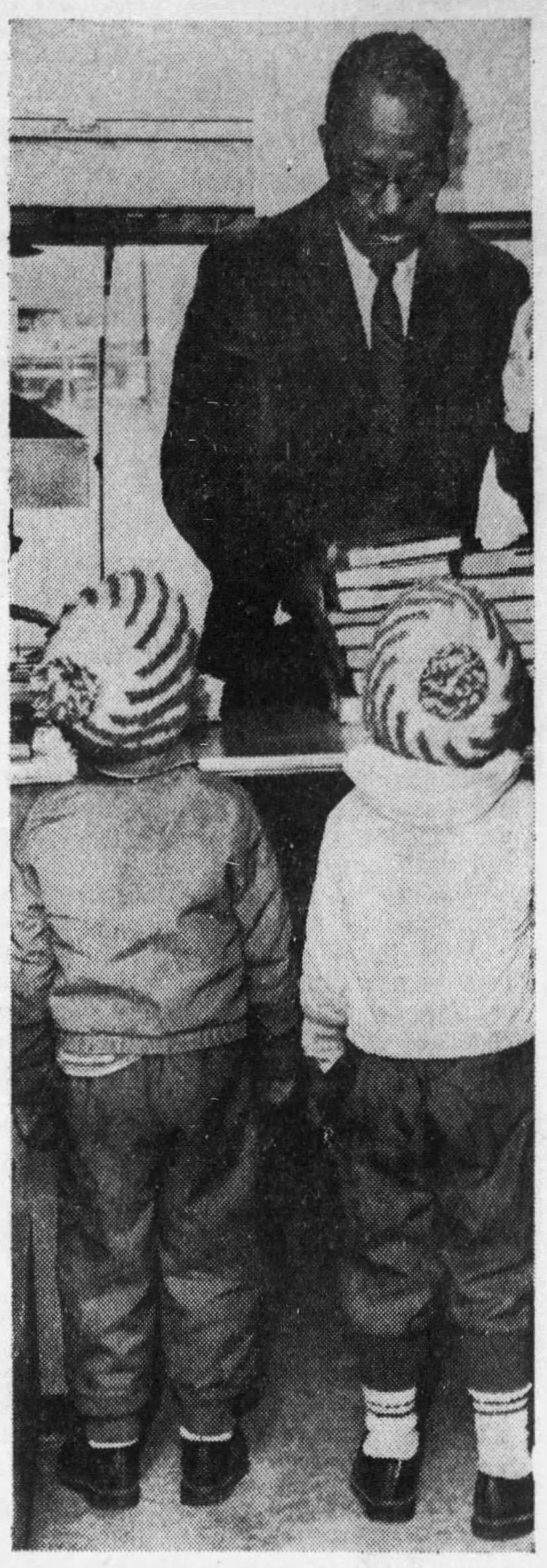
Known affectionately as Mr. Bookmobile for over thirty years, Thompson E. Williams not only drove the county’s first bookmobile, he shared his love of learning with generations of readers.

Thomas E. Williams, Chemung County's first bookmobile clerk and driver

Born in 1918 in Elmira to George and Helen Williams, Thompson came from a family who worked hard. His mother, Helen, raised the couple’s five children, worked at the department store Sheehan Dean & Co., and was active in many clubs and community organizations. His father, George, was a professional boxer who fought throughout the northeast under the name “Cyclone” Williams, competing in the lightweight division. Despite being recognized for his speed in the ring, he attributed to a higher power the fact that he had avoided visible scars or scrapes.

In the 1920s, George gave up boxing to pursue a different path. He threw himself into his studies, working odd jobs to support himself. He studied at Elmira Free Academy, Cook Academy in Montour Falls, and Berkley Divinity School in New Haven, Connecticut. One job he had was running a shoe shine business. It was located under the viaduct near Lake Street, and he often told people that his business had a million-dollar overhead. In 1929, he was ordained and became an AME Zion minister. Over the next few years he was appointed pastor at churches in Corning, Wellsville, and Waverly, NY, Meriden, CT, and Pittsburgh, PA.

Growing up, Thompson Williams was active in the Boy Scouts. He graduated from Elmira Free Academy in 1937, and next to his senior picture, the yearbook lists Howard University, where he intended to study.

EFA, Class of 1937

He didn’t end up going to Howard. After high school, he joined his mother to work at Sheehan Dean & Co. In 1944 he was drafted into the United States Army to fight in World War II.

Thompson trained at Fort Myers gunnery school and graduated in 1945. It was at a time when options were limited for Blacks in the military. Seeking better opportunities, Thompson joined the newly formed Tuskegee Airmen. The airmen were an elite all-Black squadron established in 1941 and the nation’s first Black military aviators. The airmen offered one of the few chances for Black soldiers to excel during harshly segregated times. Thompson did excel and achieved the rank of Corporal. Collectively, the Tuskegee airmen were awarded a Congressional Gold Medal in 2007 in recognition of their efforts during the war and leadership in integrating other branches of the U.S. military.

Honorably discharged, Thompson returned to Elmira. He coached the X-Cel Oilers basketball team from the Neighborhood House

Manager Williams at left
through an unbeaten season, and he worked for the Elmira Foundry Company. He also fell in love with the girl across the street, whose last name was the same as his first - Eva M. Thompson. They married in 1948.

Eva M. Thompson
1950 was a big year for Thompson and Eva Williams. They welcomed their first of seven children, and in December, Thompson was hired to be clerk and driver for Steele Memorial’s brand new $9,000 Bookmobile. He would hold the position he held for the next thirty-one years.

Mr. Bookmobile in action 
Chemung County had qualified for the first bookmobile under the State Aid for Libraries Law passed in June 1950. When it began, the bookmobile carried close to 3,000 books and delivered around 500 weekly. It served 21 rural communities, 65 schools, and 5 village stations.

In 1974, Thompson’s health forced him to scale back and he switched to driving a van for the library. Six years later, he died unexpectedly at 62 years old. It was one week before he had planned to retire.

In 1990, the Historical Society started collecting Black oral histories from people of Chemung County. We are fortunate that Thompson’s wife Eva Williams, was one who shared her story. (link to interview here) In her interview she talks about her husband, mentioning that he encouraged her to return to school to further her own studies, which she did. She talks about how he believed in education and sought out scholarships for his own children to go to college. He also encouraged Eva to vote, telling her that "it makes a difference in your job and in your community."

Thompson and Eva’s oldest child, Holly, who went on to be an educator, school administrator, and minister, remembers her father loved reading and always had a book with him. When asked what kinds of books her father read, Holly remembered that he liked books on early African civilizations and would share what he learned with his family.

Chemung County's first bookmobile, 1950s

Today the bookmobile continues to deliver books around the county. You can find current stops and times at https://ccld.lib.ny.us/bookmobile/

Monday, July 26, 2021

Jury Duty

By Rachel Dworkin, archivist

This past week, I was summoned for jury duty. These days, a lot of Americans would prefer to avoid it, but, historically, people have fought hard for the right to sit on a jury.

These days in New York State, potential jurors are drawn from lists of registered voters, local property tax payers, licensed drivers, and persons applying for public assistance.  Once a pool of potential jurors has been summoned, the lawyers for both sides work together to select either six or 12 jurors (depending on the type of trial) and up to two alternates to hear the case. The attorneys interview potential jurors to select those which they think might be open to their case while excluding those they fear will not be. In an article entitled “How I Pick Out Men for a Jury” written for The American magazine in 1919, Elmira attorney John B. Stanchfield explained his process:

In selecting a jury, for example, the law plays practically no part. It is understanding of human beings that counts. For this reason, I study your face, your tone of voice, the answers you make and, especially, whether or not you look me in the eye when speaking. I make a point to find out whether you are well-to-do, or perhaps a clerk at a store. In addition, I always want to know the occupation of a prospective juror’s children, as well as the occupation of the juror himself. I ask your age, religion, and many other things because they all aid me, as the prosecutor or the lawyer for the defense, to make up my mind whether or not I want you for the jury.

Ideally, Stanchfield wrote, a jury should comprise of four strong men and eight intelligent and resolute ones. A juror who could empathize strongly with the defendant due to similarities in profession, class, religion, race, age, or club association, would be unlikely to convict, while someone from a different background might be more likely to return a guilty verdict. It was true back in 1919 and it is still true today. That’s a big part of why so many people have fought so hard to ensure that women and minorities can participate on juries.

John B. Stanchfield, attorney

 The Thirteenth, Fourteenth, and Fifteenth Amendments to the U.S. Constitution abolished slavery and guaranteed citizenship and basic civil rights to African Americans. The Civil Rights Act of 1875 explicitly extended those rights to include participation on juries, among other things. In 1883, the Civil Rights Act of 1875 was overturned by the Supreme Court, opening the door for states to find ways of excluding Blacks from jury participation. This was especially the case in the South. In 1935, the Supreme Court reversed course in Norris v. Alabama (1935), declaring that the State could not systematically exclude Blacks from jury service. Individual lawyers could continue to attempt to dismiss potential jurors based on race until Batson v. Kentucky (1985), when the court ruled that a State violates a defendant’s right to equal protection in a trial where members of their own race have been purposely excluded from the jury. Despite the ruling, the problem of racial exclusion persists.

In Chemung County, only two Blacks were summoned as prospective jurors between 1875 and 1900. Richard Johnson, a Black man living on East Clinton Street, was summoned for a case in January 1899. He worked as a laborer and had not been following the news of the case in the paper, despite living in the same neighborhood as the victim. Attorney John B. Stanchfield argued that he was unqualified to serve and had him dismissed. It was not until well after 1935 that a Black man was selected to sit on a jury in Chemung County. 

Chemung County courtroom, 1896

 Women were also long excluded from juries. In 1870, the Chief Justice of Wyoming Territory began the practice of mixed-gender juries, but his successor in 1871 terminated the practice. In 1883, Washington Territory granted women the right to serve on juries, but subsequently rescinded it in 1887. Utah became the first state, in 1898, to grant women the right to sit on juries. After New York women won the right to vote in 1917, a group of four women who had recently registered to vote became the first women to sit on a jury in this state in a case in Sidney in January 1918. The problem was, New York State law specified that only men could serve as jurors. It wasn’t until 1927, after repeated attempts to amend the law, that New York officially allowed for female jurors, but service for women did not become mandatory until 1930s.

In 1935, The Star-Gazette interviewed local women about their thoughts on compulsory jury duty for women. Dean Frances M. Burlingame of Elmira College was all in favor as she didn’t “see any essential difference between the citizenship of men and women” and therefore believed women should have the same duties as men. Others were somewhat less enthusiastic about the prospect of serving, but agreed it was important.  Mrs. George Diven, president of the Chemung County Republican Women’s Club, disapproved of the entire jury system, but did not say what she would replace it with.

Mississippi became the last state to make women eligible for jury duty in 1968. As late as 1979, some states continued to require women to opt-in to serve until the Supreme Court declared it unconstitutional. In 1994, the court ruled that a jury where members were excluded based on gender was a violation of the Equal Protection Clause of the Fourteenth Amendment.

I didn't end up on a jury this time, but I'm still glad I at least have the right to serve.


Friday, July 2, 2021

Jamaica Helps Win the War!

By Rachel Dworkin, Archivist

On a crisp September morning in 1944, 900 arriving Jamaican workers filled a New York pier with song. None of them had ever been to America before, but all were eager to help with the war effort. 111 of them had come to work at the General Electric foundry here in Elmira. The foundry’s purchasing agent, Wilbur R. Simmons, had gone down to the city to meet them. He was awed by the beauty of their music.

Beginning in 1943, the Farm Security Administration began recruiting Jamaican workers to help ease farm labor shortages in the eastern states. Approximately 4,500 were brought to U.S. that summer with 1,250 of them working in New York. All told, the United States government recruited over 38,000 foreign workers from Mexico, Jamaica, the Bahamas, and other parts of the Caribbean and South America to help bring in harvests across the country that year. The practice continued throughout the war.

Agriculture wasn’t the only place where there were wartime worker shortages. Local manufacturers found themselves scrambling to replace workers who had left for military service. In the spring of 1944, John R. Row, the plant engineer for General Electric’s Elmira Foundry, headed to the Caribbean to recruit guest workers. The original plan had been to bring folks from the Bahamas, but that island had put a hold on recruitment due to labor shortages of their own. He ended up going to Jamaica instead.

The first 111 Jamaican guest workers arrived in Elmira on September 24, 1944. They were to be housed at the plant in barracks built specially for them. The barracks featured 2 large halls with bunk beds, a recreation hall, a large kitchen, store house, communal bathroom, and laundry facility. James O’Connor, a former steward for a Kingston cricket club, and Eustace Fothergill, a ship’s cook from Old Harbor, took command of the kitchen. Subsequent guest workers were housed in private apartments or with host families, mostly located in Black community on Elmira’s east side. 

Jamaican worker's arrival, September 26, 1943. Courtesy Elmira Star-Gazette

 The men were initially hired to work a 6-month contract with an option to renew. Although few of them had any experience working in foundries, they were assigned to work in the manufacture of gray-iron castings. The arrangement worked well. Not only was the initial contract renewed through June 1946, additional workers were brought in a few months later. Once the harvest was brought in, Kennedy Valve Manufacturing Company hired 36 Jamaican agricultural laborers to stay in Elmira and work over the winter. Chemung Foundry and Bendix-Eclipse ended up hiring Jamaican workers as well. All told, nearly 300 Jamaicans ended up working in Elmira factories during the course of the war.

Elmira did its best to welcome them. The Council of Social Agencies worked to put together programs and resources to provide them with recreational opportunities in their off hours. Several organizations donated books, magazines, and athletic equipment for the barracks. Elmira College offered a series of lectures and discussion groups on various topics. The Neighborhood House hosted an all-Jamaican choral group. Various churches, including Monumental Baptist Church and St. Luke’s Congregational Church, opened their doors to worshippers. For Christmas 1945, St. John’s Episcopal Church of Elmira Heights held a special concert for them and Trinity Episcopal Church hosted several concerts by the Jamaican Gospel Choir.

The last of the Jamaican workers finally left in 1946. On April 18, Elmira Foundry held a farewell banquet at the Jamaican barracks. Various plant officials came and sang workers’ praises. They presented George Barrett, the chairman of the Jamaican Camp Council, and other workers with scrolls of merit and professional references. The company also presented St. Luke’s Congregational Church with a special bulletin board honoring the Jamaican workers who had worshipped there during their stay. The temporary workers went home in the summer of 1946, but some eventually came back to settle in the community they had come to love. 

Charles Brown's naturalization papers, 1957. Brown was originally from Jamaica.


Friday, June 18, 2021

Revisiting Juneteenth

by Susan Zehnder, Education Director

(This is an updated repost of something published last year)

From WENY

Juneteenth is a celebration and things will be even more festive at this year’s Juneteenth festivals. Not only does it fall on a Saturday, and we are coming out of pandemic restrictions, but days ago it was officially recognized as the country’s 11th Federally observed holiday. It passed with bipartisan support. Because of this, I chose to update a blog I did last year and post this quick recap of the holiday's origins. 

The holiday name refers to the day it happened. On June 19th in 1865, two months after the last significant battles of the Civil War ended, Union General Gordon Granger and his troops arrived in Galveston, Texas.

In two months, the men had traveled 460 miles coming from Mobile, Alabama. They covered eight miles a day. Usually, troops covered 15-30 miles per day, so it was a slow journey. The news they brought to Galveston quickly changed lives and history, giving cause for celebration. For two months earlier the Confederate leader of the Army of Northern Virginia had surrendered, the American Civil War was now over, and all enslaved people were to be freed.

Two years before this, Abraham Lincoln had signed the Emancipation Proclamation. Under his presidential order, “all persons held as slaves” within the rebellious states “are and henceforth shall be free” and the proclamation encouraged all rebellious states to rejoin the Union. Lincoln intended to win the war while preserving the Union. In the end, no southern states joined the Union, and his proclamation did not actually free any enslaved people at the time. It still allowed slave-holding states, fighting on the side of the Union, to retain slaves. It also did not require areas held by the Union to free enslaved people. However, it did allow freed slaves to join the Union army, an army desperately short of soldiers.

The importance of the Emancipation Proclamation is how it became a catalyst in changing the US Constitution. It was instrumental in passing the 13th (1865), 14th (1868), and 15th (1870) Constitutional amendments. These amendments address the abolishment of slavery; the granting of citizenship to former slaves; and prohibition of states from denying citizenship to former slaves.

In 1861, Texas had declared secession from the United States and joined the Rebel cause. Soldiers wanting to fight for Texas, headed east, and almost no battles were fought on Texas soil. The two-year gap between Lincoln’s proclamation and Granger’s delivery of the news in 1865 brought little change to the institution of slavery in Texas. By the time the official word arrived in Galveston, new restrictions had already been put in place. These included forbidding formerly enslaved people to “travel on public thoroughfares unless they had passes or permits from their employers.” Despite these restrictions, and facing possible fines, Black people gathered and celebrated.

Juneteenth is sometimes called Freedom Day, Jubilee Day and Cel-Liberation Day. Since 1865 it has been celebrated in various communities throughout the nation. Now it’s a national holiday. 

In Chemung County, Juneteenth celebrations started being observed in 1993, and have been observed ever since. Last year the event was virtual, so this year’s theme, “Devoted to Unity” is all about being a community. To find out more about this year’s event highlights and performers, visit the Juneteenth facebook page. Celebrations will take place in Elmira’s Ernie Davis Park with a central stage for musical acts and performances. There will be vendors and lots of food. Past celebrations have included prayers led by Black ministers, patriotic demonstrations, Juneteenth history, and exhibitions by local groups. This year the event is adding a pop-up vaccination site, something we hope will be gone in the future.

The news that arrived in Galveston more than 155 years ago is part of our nation’s complicated history. Being reminded that the past informs the future can sometimes be worth a second read.