Monday, November 8, 2021

Veterans Day

 by Susan Zehnder, Education Director

With Veterans Day coming up, it’s a good time to think about how we can teach children why November 11th is a special day. It’s also a great time to ask yourself how much you really know about how this holiday was created and how it has evolved over the years.

Teacher John Liquori and his first grade class

Elmira City School District elementary teacher John Liquori is taking a new approach this year to teach students about Veterans Day. He is taking advantage of Fassett's physical location in the community by connecting students to nearby organizations. With the help of area veterans and community members, the Vietnam Veterans Memorial War Museum, the John W. Jones Museum, and the Chemung County Historical Society, he arranged a special program for Fassett’s nearly 100 first graders. 

On Monday November 8th, students will spend two hours rotating through 5 different stations to build their understanding of what Veterans Day is all about. They'll meet local veterans, learn about the Vietnam War Memorial Museum, hear about care and treatment of the American flag, see uniform medals from local veterans who served in different military branches, and learn about an important contribution Elmiran John W. Jones made for veterans during the American Civil War.

For others, here’s a quick refresher course on Veterans Day. It began in 1919, when November 11th was known as Armistice Day (an armistice is an agreement by opposing sides to stop fighting). The armistice for World War I took place on the eleventh hour of the eleventh day of the eleventh month, making the date of November 11th historically significant. At first, celebrations commemorating the soldiers were community driven. The day was officially recognized in 1926 by congress and became a national holiday in 1938.

In 1954, President Dwight D. Eisenhower, a veteran himself, decided that November 11th would be the country’s official day to recognize all military veterans’ service and sacrifice. He renamed the day Veterans Day and issued the first Veterans Day Proclamation:

In order to insure proper and widespread observance of this anniversary, all veterans, all veterans' organizations, and the entire citizenry will wish to join hands in the common purpose. Toward this end, I am designating the Administrator of Veterans' Affairs as Chairman of a Veterans Day National Committee, which shall include such other persons as the Chairman may select, and which will coordinate at the national level necessary planning for the observance. I am also requesting the heads of all departments and agencies of the Executive branch of the Government to assist the National Committee in every way possible.

Veterans Day would continue to honor those who fought in WWI, and would now include veterans who served in other wars. It would pay tribute to all American veterans, both living and dead. It would recognize and honor those who served their country with honor during wartime or in peace.

The original idea was for citizens to observe the day with parades, public speeches, and meetings. Businesses were asked to pause for 2 minutes of silence and reflection at 11:00 am. In Chemung County, in anticipation of the first Veterans Day, the Star-Gazette published this quiz:


(See answers below.)

The 10 questions show how closely the new Veterans Day was initially tied with WWI’s Armistice Day.

In 1968, congress shifted the day to the fourth Monday of every October. The intention was to create more three-day weekends for federal employees and to promote travel, cultural activities, recreation, and commerce. What it mainly did was confuse people. Many states didn’t comply with the change and stuck to celebrating on November 11th.

In 1975, President Gerald Ford, who was also a veteran, returned the official recognition date to November 11th to realign it with the original importance of the date.

Today, many organizations around the nation hold Veterans Day observances, and volunteers refresh grave sites of military personnel, adorning them with new flags. In 2021 there are approximately 19 million living US veterans. Gone are the country’s WWI veterans, and dwindling are the numbers for WWII vets still alive, hovering somewhere around 240,000.

The restoration of the observance of Veterans Day to November 11 preserved the historical significance of the date, and turned the lens to the day’s important purpose. Teaching new generations that it is a day to celebrate and honor America's veterans for their patriotism, love of country, and willingness to serve and sacrifice for the common good, carries on that significance.

Thank You Wreath created for Veterans by Liquori's class


November 10, 1954 Star-Gazette


Monday, November 1, 2021

Thank You Erin!

 by Bruce Whitmarsh, Director


In the previous blog, Erin Doane slipped in at the very end that she would be leaving the CCHS after more than 10 years as our Curator. I was only a few months into my tenure as Director when I had the good fortune to hire Erin for what was then a part time position. Through the years Erin has overseen the complete reinterpretation of the Bank Gallery; was an integral part of the team that saw the museum re-accredited this past spring; and worked on any project that needed help.

Day-to-day, Erin oversaw the three dimensional collection of approximately 25,000 items ranging in scale from buttons to fire trucks. She kept an eye on the inventory of what we had, processed the new items we receive on a regular basis, and found time to put together 6 to 10 exhibits every year for both here in the museum and around the county.

Erin also worked closely with the rest of the staff on programming, helping to plan, research, and write the scripts for Ghost Walk, as well as working the event; wrote her regular blog posts; and helped out wherever she was needed. I am sure that I am missing about a thousand other things she did to help make CCHS better.

So, Thank You Erin. It has been an honor and privilege to have you as a colleague and a friend and you will be missed at CCHS.

I wish you the best as you move on to a new chapter in your life.

Bruce Whitmarsh


Friday, October 15, 2021

Ross Marvin Revisited

by Erin Doane, Curator

Ross Marvin’s story is one of tragedy and mystery. Perhaps that’s why I go back to it again and again in my research, writing, and exhibits. Back in 2013, I wrote a brief blog post about him that you can read by clicking here. After eight years, it seems like it’s time to revisit Ross Marvin’s story.

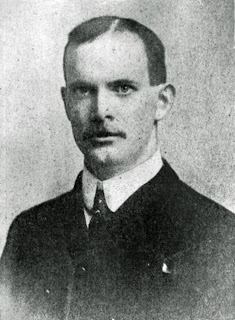
Ross Gilmore Marvin
Ross Marvin was born on January 28, 1880, the youngest of six. He graduated from EFA in 1899, and surprised everyone by earning a scholarship to Cornell University. In 1901, he transferred to the New York Nautical School where he learned nautical astronomy. After graduating from there a year later, he returned to Cornell. In 1905, he graduated with a degree in civil engineering. Before finishing school, Marvin had heard about the Arctic voyage that Robert Peary was planning for 1905-1906. He made it his goal to be part of that expedition. It is said that on graduation day, he received the letter from Peary inviting him to join his team.

Peary’s 1905-1906 attempt to reach the North Pole was not a success but he tried again two years later. Marvin served as chief scientist and Peary’s first assistant on that 1908-1909 voyage. His responsibilities included taking meteorological readings, solar observations, and depth soundings.

According to the caption of this image from an article written by Peary that appeared in the August 1910 issue of The Geographical Journal, that pile of furs is Ross Marvin taking observations at 86 degrees 38 minutes north on March 25, 1909.
Peary purportedly reached the North Pole on April 6, 1909, but Ross Marvin did not survive the journey. His two Inuit companions, Kudlooktoo and Harrigan, reported that on April 10 he broke through the ice while trying to cross a lead and died. It was weeks before Peary and the rest of his men learned of Marvin’s death and it wasn’t until September, some five months after his death, that his family back in Elmira heard the news.

The story of Ross Marvin may have ended there with the local hero’s tragic death, but 17 years later, his name was back in the news. In 1926, Kudlooktoo confessed to killing him. He claimed Marvin went crazy and tried to abandon Harrigan on the ice. Knowing that Harrigan would die if he was left behind, Kudlooktoo shot Marvin.

Kudlooktoo posing with George Borup and other Inuits, from A Tenderfoot with Peary, by George Borup, 1911
The story came as a great shock to those who knew Marvin. His family denounced the story and Peary declared that he didn’t believe it. Peary’s daughter, Marie, who had been a childhood playmate of Kudlooktoo, believed his false confession was induced by religious hysteria and was an attempt to please the white man by having a sin to confess. By that point, 17 years after the fact, there was no way of proving what had truly happened. The Arctic was a sort of no-man’s land at that time with no laws or governance, so Kudlooktoo was never tried for murder. 

Despite the dark turn of Marvin’s story, his life and accomplishments have been memorialized in many ways over the years. Peary erected a stone cairn with a wooden cross at Cape Sheridan overlooking the Central Polar Sea in his honor.

Marvin Memorial, Cape Sheridan, Left from The North Pole, By Robert E. Peary, 1910
Right from Susan Kaplan/Genevieve LaMoine, Peary-MacMillan Arctic Museum at Bowdoin College, 2011
In 1910, a large stone with a brass plaque was set on the corner of Lake Street and Union Place in Elmira as a memorial. It has been moved a couple of times since then and now rests at the corner of Lake and Church Streets by the Chamber of Commerce.

Ross Marvin Monument at the corner of Church and Lake Streets
In the late 1920s, a memorial tablet to Marvin was placed in the Sage Chapel at Cornell University.

Dedication of Ross Marvin plaque at Cornell University, c. 1926, Sunday Telegram, April 5, 1931
In 1943, Marvin’s niece Gertrude Colegrove Tum, christened the SS Ross G. Marvin, a liberty ship that was used for cargo transports during World War II. You can read all about that by clicking here.

In 1948, Marvin and all the other men who had served on Peary’s 1908-1909 Expedition were awarded medals by the U.S. government. I have heard that the reason it took so long – nearly 40 years – to be officially recognized for their efforts in reaching the pole was because there were some in congress who did not want to honor Matt Henson, who was an African American, along with the rest. 

Peary Polar Expedition medal awarded posthumously to Ross Marvin, 1948
The Marvin Islands, a group of islands in extreme northern Canada were named after him. In 1957, the Elmira Lions Club dedicated Ross Marvin Park on the triangle of land between Lake Street and Union Place. In 1967, the State University Maritime College, from which Marvin graduated in 1902, named a wing of their new Science and Engineering building Ross G. Marvin Hall. And finally, in Woodlawn Cemetery, in the Marvin family plot, is a stone dedicated to him. The inscription on the stone reads:

 In Memory of
Ross G. Marvin
Jan. 28, 1880 – April 10, 1909

 Scientist with the Peary Arctic Expedition
Which discovered the North Pole
Drowned in the Arctic Ocean Lat 84 degrees North

 Peacefully he sleeps in his watery grave.
Tho no marble shaft marks his last resting place
it is watched o’er by towering sentinels of snow and ice.
The stars too keep silent vigil while the north winds
sing a requiem for a brave soul gone to meet his maker.

Ross Marvin marker in Woodlawn Cemetery, 2018
If you have made it all the way to the end of this post, thank you! I hope you enjoyed this and other stories I have told during my 10+ years as curator at CCHS. This is my very last blog post here. I will be leaving the museum at the end of October. It’s been a great joy learning about the county’s history and being able to share it with all of you!


Monday, October 4, 2021

It Takes a Village

 by Susan Zehnder, Education Director

CCHS has a small but mighty staff. Getting all the things we do done can often mean that we need help. We are grateful for our volunteers who help us out in so many different ways, and they are our ‘village.’ Volunteers have represented CCHS at different events, set up systems to make our work smoother, created inventories to keep track of journals, prepared activity bags for students, took tickets, greeted people at museum functions, scanned photos, and completed information documenting our collections. One volunteer even tested out our Ghost Walk path to make sure that this year it will be wheelchair friendly. When we pivoted to more online work, we found volunteers who worked remotely transcribing recordings from our collection, and others who videotaped and posted dramatic readings of past historical figures. By no means is this a comprehensive list but here are some of our volunteers along with a few of the things they’ve been working on. They also answered what cool discovery they’ve come across while volunteering.

Karen puts in about 10 hours a week at the Historical Society, helping out on all sorts of projects. Lately, she's put her previous background in lab work to use taking precise notes and entering information to reconcile the museum's stored collections. One of the cool discoveries she's come across was the original 1870 marriage certificate of Samuel and Olivia Clemens. Another surprise she came across was a beautiful array of intricate bone, stone, and ivory Inuit carvings. Karen started volunteering in 2019 greeting visitors at the front desk and for the past two summers she has sat at our information desk at Wisner Park during Thursday market days, spreading the word on the Museum's new exhibits and events. She also pitched in to help with last year's Ghost Walk. We have been lucky that Karen called us to volunteer and share her time and efforts helping us get our work done.

Karen and Susan sitting at Wisner Park

Daniel is another volunteer who contacted us looking to add to his academic and archive skills and experience. He has been putting in about 8 hours over two days a week organizing the Elmira Central Christian Church information. The Historical Society received many of the Church’s boxes of papers and information to organize, put into boxes and folders, and document. When asked what discovery he’s found, Daniel mentioned how working with the collection has let him see an evolution of the organization and arch of their story over time. Daniel’s volunteer efforts are critical in keeping ahead of the archive’s continuously growing collections.

Daniel working with our collection

Bob remembers his history classes fondly while growing up. As a volunteer, he divides his 6-8 hours a week between greeting visitors and organizing our vast journal collection. A collection that started way before digital devices. Bob is a people person always quick with a smile, compliment or a joke. He says he loves to show people around the museum helping them discover new things about the area. Responding to the coolest thing he’s come across, he cites the old bank vaults (and is still searching out lost pennies!) Bob has enjoyed rediscovering some of the history right here in Elmira and Chemung County, and says he believes the Chemung Valley History Museum is a great place to find out more.

Bob greeting visitors at the front desk

Georgia has been volunteering at the Chemung County Historical Society on a steady basis since early 2017, documenting photos from our vast collection. She is also a loyal attendee at our Out to Lunch talks and programs. “I only thought I knew about our history in Chemung County, but once I started working with the photos I realized I didn’t have a clue about how much history there is in this area. I couldn’t pick just one thing that was really cool - I didn’t realize Babe Ruth had played at Dunn Field, that a canoe train that would bring the canoes to a designated area, or that there were two airports in Elmira – one near Caton Ave. and another where Broadway School is located. The list of things that existed in Chemung County that I have found out about is long and it has been a wonderful journey. I look forward to every time I volunteer – just waiting to see what I will discover next.” 


Georgia working on photo documentation

Georgia, like Karen, Daniel, and Bob are just a few of the people who help us get it done, and we thank them and all our volunteers for their contributions to the Chemung County Historical Society. If you're interested in getting involved, or find out more about what we do, send an email to Educator@ChemungValleyMuseum.org

Heather testing the Ghost Walk route


Monday, September 27, 2021

Fashion Shows at Rosenbaum’s

by Erin Doane, Curator

For 125 years, Rosenbaum’s was the place in Elmira to get the latest specialty fashions for women and children. From the early 20th century until it closed in 1989, the business put the newest styles on display for the shopping public in seasonal fashion shows at the store and other locations throughout the community.

Rosenbaum’s fashion show participants, Star-Gazette, October 3, 1933

Rosenbaum’s opened on East Water Street in 1864, just one day before Elmira was chartered as a city. The store began as a wholesale-retail business specializing in custom-made ladies’ hats and millinery trim. Over the years, it expanded to include women’s and children’s clothing and accessories. By 1930, Rosenbaum’s was so popular that it moved to a larger store at 112 West Water Street. It continued expanding throughout the 20th century until it had three locations – in downtown Elmira, at the Arnot Mall, and at the Oakdale Mall in Binghamton – and had more than 120 employees on its payroll. The business finally closed for good in 1989.

As early as the 1920s, Rosenbaum’s was highlighting its fashions in shows throughout the city. In 1923, the store was a hit at the American Legion Style and Fashion Show at the Armory. The Star-Gazette reported that “a gray afternoon gown of a combination Russianarian and Canton Crepe, shown by Rosenbaum’s and worn by Miss Alma Myers, caused much comment Friday night. The cape of the gown was of poiret twill, lined in turquoise blue canton crepe. Miss Myers wore a broad brimmed, light blue hat with this gown, flower trimmed and underlined with the color of roses.”

Inside Rosenbaum’s on West Water Street, mid-20th century
After Rosenbaum’s moved in 1930, the company started hosting fashion shows inside the store. Carolyn Modes designs were widely popular at that time throughout the country. By 1938, major Hollywood costume designers including Orry Kelly, Walter Plunket, Edith Head, Howard Greer, and Travis Banton were creating fashions for Carolyn. Rosenbaum’s would bring in members of the Carolyn design staff to conduct fashion shows. Typically, the show was run three times over the course of one day with “living models” displaying the latest clothing of the season. Some of the shows featured outfits that hadn’t even been released to the public yet. One such show on September 28, 1933 brought more than 1,200 people into the store.

Another Carolyn Modes fashion show at Rosenbaum’s in 1934 featured both living models and a famous stylist broadcasting new style notes over the Columbia Broadcasting System in a nation-wide hookup and by special arrangement through the local radio station WESG. http://chemungcountyhistoricalsociety.blogspot.com/2016/12/wesg-broadcasting-live-from-mark-twain.html Years later, in 1955, Rosenbaum’s took advantage of another technology to reach a wider audience for their premiere fashions. “Fashion in the News” was a 20-minute long, full color, 16mm sound film showing a complete wardrobe of new fall clothes by Carolyn. The fashions were worn by “New York’s most famous television and fashion models” and the film was narrated by Vyvyan Donner of Movietone News. Rosenbaum’s loaned the film to women’s clubs, church groups, and other organizations for free.

Teresa Carozza modeling at Rosenbaum’s fashion show, mid-1950s

In 1937, Rosenbaum’s underwent a major expansion and it added the Young Folks Shop to its departments which had a complete line of children’s wear from infant to teenage. This marked a shift to more focus on younger customers. From the late 1940s through the 1960s, the Mademoiselle fashion shows held at the store focused on styles for young women going off to college or starting careers. In 1966, Rosenbaum’s and Eldridge Park sponsored a Miss Southern Tier Queen contest. The winner, 18-year-old Charlotte E. Riedel of Ithaca, was announced during the store’s “Fashion Fit for a Queen” fashion show at the park on August 21. Charlotte received $100 in cash and a $100 gift certificate from Rosenbaum’s.

Rosenbaum’s advertisement, Star-Gazette, August 15, 1955
In 1966, Rosenbaum’s started a Charm and Modeling School for teens and pre-teens. For just $1 a week, girls could take part in a 10-week course taught by Miss Marie Bowman, former Niagara Frontier Milk Princess. Her classes guided the students in the areas of figure and posture correction, wardrobe planning, hairstyling and haircare, good grooming, basic makeup, voice cultivation, self-confidence, charm, poise, and personality development. Those who completed the course of study had the opportunity to model in one of Rosenbaum’s fashion shows. Some of the Charm and Modeling School graduates were actually among the 150 young people who modeled Rosenbaum’s clothing in a fashion show sponsored by Parents Without Partners that November.

Rosenbaum’s Charm and Modeling School students at Parents Without Partners fashion show, left to right: Nancy Henrich, Elizabeth Dixon, and Marie Zwanka, Star-Gazette, December 4, 1966
Rosenbaum’s continued adverting the newest styles in fashion shows at its stores and at offsite locations as fundraising events for groups like the Elmira Newcomers Club, the YWCA, the Zonta Club, and the Rotary Anns for nearly fifty years. The company showed off its latest seasonal looks one last time on November 30, 1988 at the Christmas Gala Fashion Show at St. Patrick’s Church in Elmira. Rosenbaum’s closed its downtown store just two months later. The store at the Arnot Mall lasted ten more months before closing as well.


Monday, September 20, 2021

It's a Wrap


by Susan Zehnder, Education Director

This summer we were asked a number of questions that inspired new discoveries, more questions, a couple of laughs, and even a possible ghost story. Who asked these questions? One of the seventy participants who accompanied us on one of our nine Walking Tours this summer. We’ve finished our tours for the season, and met people from out of state, and others whose families have lived here for generations. Either way, everyone now knows a little more about the area’s architectural details, hidden stories, and some frisky gossip.

Here are some highlights, in case you missed them. Our Architectural Tour of Maple Avenue was led by archivist Rachel Dworkin who walked and talked pointing out examples of architectural house styles through the years. If you’re a regular to this blog, you’ll see a more comprehensive explanation of what she shared in the previous two blogs.


Our Historic Tours started at the museum, using the bank building as a time marker. The Chemung Canal Bank was built in 1834, designed by architect Ammon Beardsly. The structure is the oldest commercial building in the city and today houses the Historical Society and History Museum. Over the next hour the tour passed other buildings along Lake Street, heading north to Church Street, west to Baldwin Street, south to Water Street and after passing the distinctive 1971 Chemung Canal Trust Company Bank we looped back to the museum. Along the way we mentioned over 23 different blogs we’ve written with connections to history. It might be true stories about the buildings, streets, or people that lived in the area and the topics we covered were as diverse as 19th century billiards to 20th century smut. We’ve always said we don’t have a blog about the Adult Book Store on Lake…..yet. Perhaps this mention counts?


Our third tour was a fun 1913 Gossip Tour which also lasted an hour. Here our curator Erin Doane walked a similar route to the historic version, but shared stories that were darker, and a bit more titillating. You’ll have to join us next year if you want to hear those. A bonus to her tour, Erin wore a vintage dress for the stroll. She also wore a hat she claimed she bought in the Amazon, or was that on Amazon? Her stories were the rumors and gossip of the day. Who thought Lake Street would have so many murders, hangings, or surprised mistresses over the years.


Our summer Walking Tours have come to a close. We’re busy getting ready for a different kind of walk - our 15th annual Ghost Walk around Woodlawn Cemetery. We’re excited to offer three different options this year over three different days and tickets are going quickly. If a historic cemetery walk at dusk or in the dark interests you, check out the details on our website today.

We enjoyed ourselves leading the walks, and were so pleased to hear others did too. We were also lucky with the weather for 8 of the 9 tours. The last one took place in drenching rain, which was maybe a fitting end to the season.

Monday, September 13, 2021

Dating With Style: 20th Century Housing (Part II)

by Rachel Dworkin, archivist

Like clothing, architecture has fads, trends, and fashions. In previous blogs, I have written about 19th century housing styles, as well as those from the early 20th century. Elmira and its suburbs expanded rapidly during the 1910s and 20s, but the Great Depression ground that growth to a halt. The aftermath of World War II kicked off a new housing boom across the nation which was dominated by such styles as Minimal Traditional, Ranch, Split Level, Contemporary, Shed, and Neoeclectic.  Minimal Traditional, Ranch, and Split Level are ubiquitous throughout Chemung County's post-war suburbs, but Contemporary and Shed never seemed to have caught on here. Neoeclectic is what you find in many late-2oth and early 21st century developments.

Minimal Traditional was popular in the 1930s through the 1950s. They’re usually one-story homes with built much like a Tudor with side gables and a prominent front cross gable, but with a less steeply pitched roof. They often make heavy use of stone or brick veneer. 

Minimal Traditional home on Larchmont Avenue
 

Ranches were developed in California in the 1930s and became the denominate style for residential architecture during the 1950s and 60s. The style borrows heavily from Craftsman, Prairie, and also Spanish Colonial styles found throughout the Southwest. They’re always one floor with either hipped roofs or side gables with wide overhanging eaves. Their rise to prominence accompanied the death of public transport, so most have some sort of built-in garage or car port.

Ranch on Hendy Avenue
 

The Split Level rose to popularity in the 1950s as a modification to the basic Ranch. Like the Ranch, it was either hipped or side gabled and had a built-in garage. The first level usually consisted of said garage and a family room, with dining room and kitchen on the middle level, and bedrooms on the upper level. The Split Level was popular through the 1970s. 


Split Level on Acorn Road
 

The Contemporary Style, sometimes called American International, drew heavily on International Style in terms of windows and roofing, although some do have pitched roofs. Unlike the International Style, they tend to have walls decorated with wood, stone, or brick veneer rather than plain stucco. Shed Style developed in the 1960s and continues to be used today. The defining feature is the multi-directional shed roofs which give the house the look of colliding geometric shapes. They usually have wood siding and/or brick veneer. Chemung County doesn't have many examples of either style because their peek popularity in the late-1960s through the 1970s coincided with the start of an economic downturn and decline in local population.

Neoeclectic is basically a return to the earlier Eclectic Styles after a brief pause following World War II. Unlike earlier architectural styles which began with high-fashion architects designing statement homes for the rich, the Neoeclectic Movement began with the builders of modest homes putting a new spin on late-19th and early-20th century designs. In this area, there are examples of Neocolonial, Neo-Tudor, Neo-French, and Neo-Victorian. The Neoeclectic Movement is currently the dominant style in McMansions and newer suburban housing. 

Now that you know the different styles of residential housing, take a drive around and make note of what you see.  Consider what the types of houses reveal about the growth and development of different neighborhoods.